
How to Identify Green Sandpiper Feathers
How to identify the dark, sparsely spotted upperparts and strikingly dark underwing of this Eurasian shorebird.
Read the full Green Sandpiper encyclopedia entry →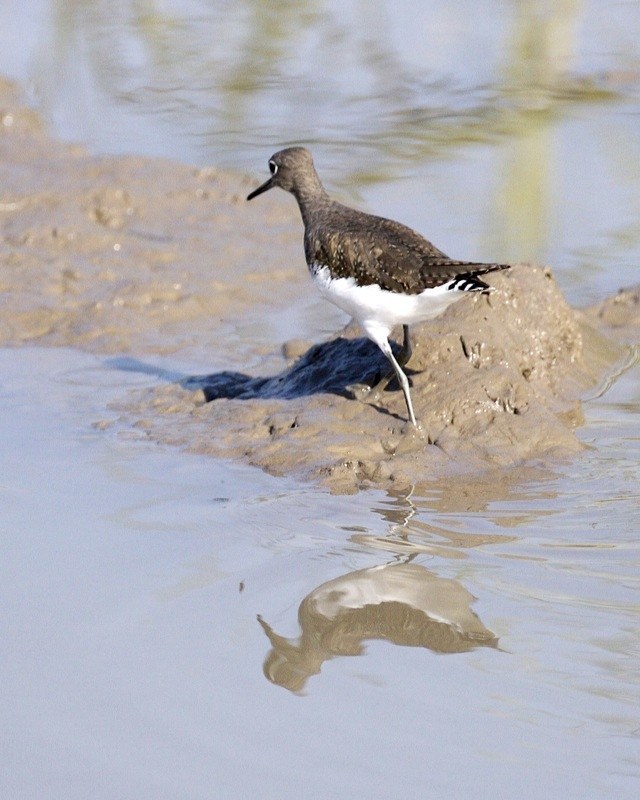
What Green Sandpiper's Feathers Look Like
Green Sandpiper feathers run darker overall than most similar shorebirds: back and wing covert feathers are a blackish-olive to dark brown, marked with only small, sparse pale spots - much less heavily spotted than close relatives, so the feather can look almost plain dark at a glance. The underparts are clean white. In flight, the rump and base of the tail flash bright white, contrasting sharply against the dark back - a useful clue if you find a rump or tail-covert feather. The tail itself is white with bold black bars near the tip. Perhaps the single best diagnostic feather, if you can find one, is from the underwing coverts, which are strikingly dark blackish - much darker than almost any similar sandpiper, which typically show pale or lightly barred underwings. Legs are short and greenish (not a feather trait, but useful if the bird itself is seen).
Step-by-Step: Is This Feather From a Green Sandpiper?
- Check how spotted the feather is. A dark, mostly plain feather with only a few small pale spots suggests Green Sandpiper; heavier, denser spotting suggests a look-alike (see below).
- Look at any tail feathers. White with bold black bars near the tip, especially alongside a bright white rump feather, is diagnostic.
- If you find an underwing or axillary feather, check darkness. A very dark, almost blackish underwing feather is one of the most reliable single clues for this species.
- Consider overall feather tone. Blackish-olive rather than warm brown or grey points toward Green Sandpiper.
- Factor in habitat. Feathers found near small wooded pools, ditches, or forest-edge wetlands (rather than open mudflats) fit this species' preferred breeding habitat.
Similar Species & How to Tell Them Apart
- Wood Sandpiper: Paler and more heavily spotted on the upperparts, with a pale, lightly marked underwing rather than Green Sandpiper's strikingly dark one - the underwing color is the most reliable separator when available.
- Solitary Sandpiper (New World counterpart): Similar dark, sparsely spotted look and dark underwing, but found in the Americas rather than Eurasia/Africa - if you're outside the Old World, Solitary Sandpiper is the more likely match for this exact plumage type.
Where & When You'll Find Them
Green Sandpipers breed across northern Eurasia, often nesting in old songbird nests in trees near wooded pools and streams - an unusual habit for a shorebird - and winter across southern Europe, Africa, and southern Asia. Because they're strongly migratory, feathers are most likely to be found during spring and autumn migration stopovers at small ponds, ditches, and quiet wetland margins, in addition to breeding-season finds near forest pools in the far north.
Frequently asked questions
Why does this feather look so plain and dark instead of spotted?
Green Sandpiper upperpart feathers are only sparsely marked with small pale spots, giving a much darker, plainer look than close relatives like Wood Sandpiper, which are more heavily and evenly spotted.
What's special about the underwing feathers?
Green Sandpiper underwing coverts are strikingly dark blackish, one of the most reliable diagnostic features if you can find an underwing or axillary feather, since most similar sandpipers show much paler underwings.
How do I tell this apart from a Wood Sandpiper feather?
Wood Sandpiper is paler and more heavily spotted above with a pale underwing, while Green Sandpiper is darker with sparse spotting and a notably dark underwing - check both the spotting density and underwing color.
Could this be a Solitary Sandpiper feather?
It's very similar in plumage, but Solitary Sandpiper occurs in the Americas rather than Eurasia/Africa, so location is your best clue for separating the two nearly identical-looking species.
When during the year are these feathers most likely to turn up?
Look during spring and autumn migration around small ponds and wetland edges, or in summer near wooded pools in the far north where the species breeds, sometimes reusing old tree nests.