
How to Identify Green-naped Lorikeet Feathers
Distinguishing the green nape band, violet-blue head, and orange breast feathers of this colorful Indonesian lorikeet form.
Read the full Green-naped Lorikeet encyclopedia entry →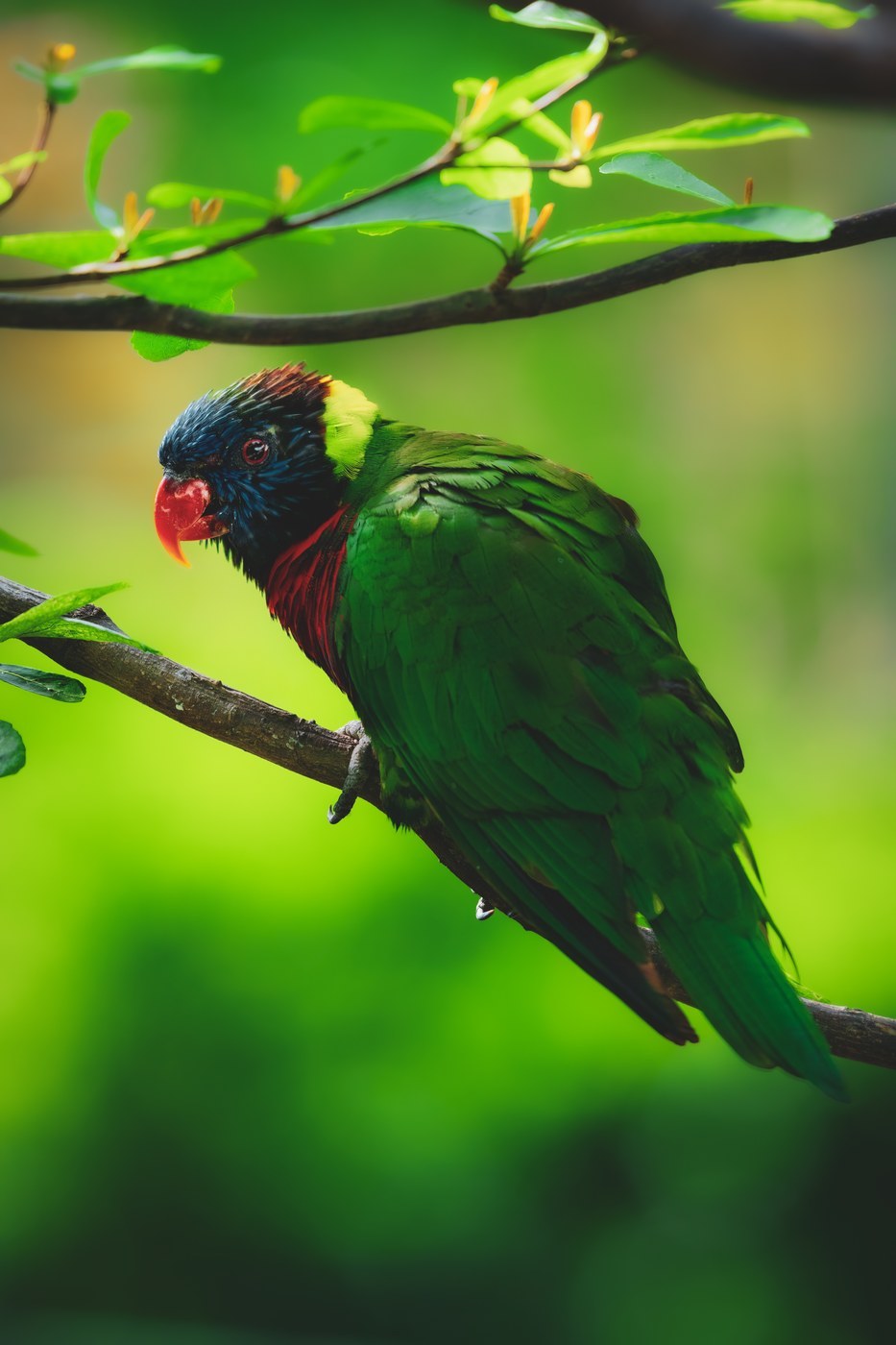
What Green-naped Lorikeet's Feathers Look Like
This colorful lorikeet (about 26 cm), a regional form of the widespread Rainbow Lorikeet complex, shows a deep violet-blue head with a bright orange-red bill. The single most useful diagnostic feature is the nape: feathers here are green, forming a distinct green band or collar at the back of the head - a feature that separates this population from other Rainbow Lorikeet races, some of which show a yellow nape collar instead. The back and wings are a rich green, while the breast shows an orange-yellow band, often with fine yellowish streaking on individual feathers. The belly is blue, and the tail is green. In flight, the underwing flashes yellow, so an otherwise plain-looking wing feather that shows yellow on its underside is a useful confirming clue.
Step-by-Step: Is This Feather From a Green-naped Lorikeet?
- Check nape feather color first. Green (rather than yellow) feathers from the back of the head/neck are the clearest diagnostic separating this form from other lorikeet races.
- Look at head color. Deep violet-blue feathers indicate the crown/face area.
- Check breast feathers for streaking. Orange-yellow feathers with fine streaks suggest the breast band.
- Inspect belly feathers. Blue coloring on the lower body is consistent with this species.
- Flip a wing feather over. A yellow flash on the underside, contrasting with a green upper surface, supports lorikeet identification broadly.
Similar Species & How to Tell Them Apart
- Other Rainbow Lorikeet races/subspecies: Several regional forms show a yellow or orange nape collar instead of green - if the nape feathers are yellow rather than green, you're likely looking at a different race within the same widespread species complex.
- Scaly-breasted Lorikeet: Almost entirely green with just a red bill and no blue head or orange breast band at all - much plainer overall, making it easy to rule out if any blue, orange, or violet feathers are present.
- Other Trichoglossus lorikeets: Differ mainly in the extent and color of head, breast, and nape patterning; always check nape color specifically since it's the most reliable marker for this particular form.
- Other Indonesian parrots generally: Few share this exact combination of violet-blue head, orange-streaked breast, and blue belly, so the overall color sequence from head to tail is a strong confirming pattern even before checking the nape.
Where & When You'll Find Them
Green-naped Lorikeets are found in the Lesser Sunda Islands of Indonesia, including Bali and Lombok, where they favor coconut groves, flowering trees, and forest edge. Like other lorikeets, they are nomadic rather than strictly migratory, following the bloom of flowering trees across the landscape, so feathers can appear wherever nectar sources are currently abundant, with no single fixed molting season tied to a temperate calendar.
Frequently asked questions
Why does the nape color matter so much for identification?
The green nape band is the specific feature separating this lorikeet form from other Rainbow Lorikeet races, several of which show a yellow nape collar instead - it's the single most useful diagnostic feather to check.
What does a yellow flash on the underside of a wing feather mean?
That's typical of lorikeets generally - a yellow underwing patch visible in flight, useful for confirming a lorikeet origin even if it doesn't pin down the exact race.
How is this different from a Scaly-breasted Lorikeet feather?
Scaly-breasted Lorikeet is almost entirely plain green with no blue head or orange breast band, so any feather showing blue, violet, or orange rules that species out in favor of a Rainbow Lorikeet type.
Could this be a different Rainbow Lorikeet subspecies?
Possibly - other races show yellow or orange nape feathers instead of green, so if the nape color doesn't match, you may be looking at a related subspecies rather than this specific form.
Is there a season when these feathers are more common?
Not a fixed one - these lorikeets are nomadic, following flowering trees across the landscape, so feathers turn up wherever blossom is currently abundant rather than on a strict seasonal schedule.