
How to Identify Green Honeycreeper Feathers
How to tell the male's turquoise-green body and black hood from the female's plain grass-green plumage on this tanager relative.
Read the full Green Honeycreeper encyclopedia entry →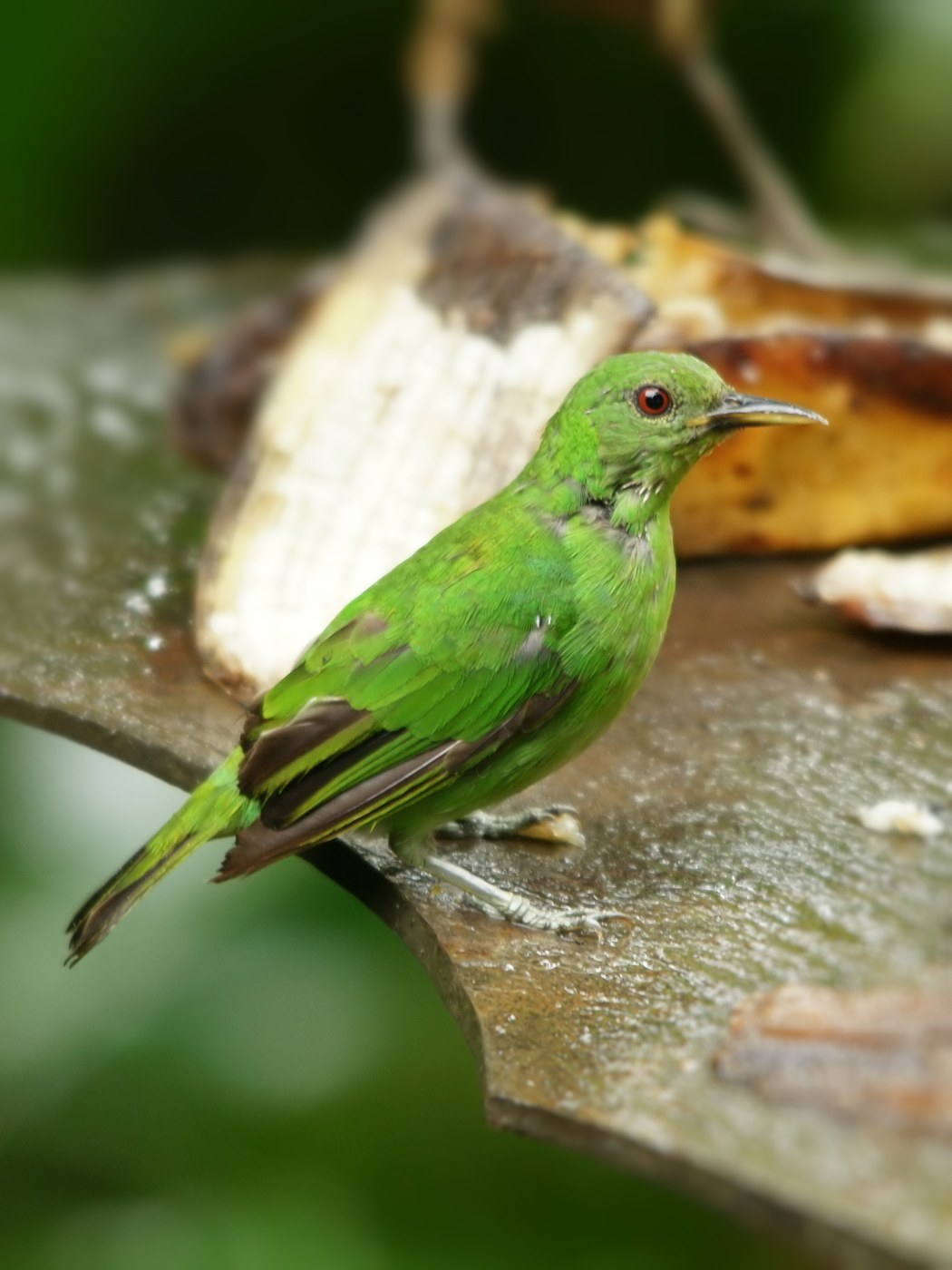
What Green Honeycreeper's Feathers Look Like
Male and female Green Honeycreepers look so different that their feathers tell two separate stories. Males are covered in a striking turquoise-green that leans noticeably more blue than a typical leaf-green - almost a pale, cool aquamarine tone - and this covers the whole body except for a contrasting black hood around the face, chin, and area surrounding the short, slightly downcurved yellow bill. Females, by contrast, are a uniform, clean grass-green all over, paler on the belly, with a plain yellowish-based bill and no black markings at all. Both sexes have relatively short, compact contour feathers without any streaking or barring - the diagnostic feature is purely the color and, in males, the black-versus-turquoise contrast.
Step-by-Step: Is This Feather From a Green Honeycreeper?
- Judge the exact shade of green. Male feathers should look distinctly blue-toned turquoise rather than a straightforward leaf green - hold it next to something plain green for comparison.
- Look for black. A feather that is solid black and small, especially if paired with turquoise feathers found nearby, suggests the male's facial hood.
- Check for any streaking. Feathers should be plain and unmarked - no bars, no spots, no streaks. Streaking suggests a different species.
- Consider the female possibility. A plain, bright grass-green feather with no black could be a female Green Honeycreeper, but this is very hard to distinguish from many other green tanagers - context (location, other feathers nearby) helps.
- Check bill-adjacent feathers if present. A short feather with a slightly yellowish base near where feather meets bill supports honeycreeper origin.
Similar Species & How to Tell Them Apart
- Blue Dacnis: The male is a rich cobalt blue with a black hood, not turquoise-green, making the two easy to separate when a feather's blue tone is deep rather than pale/aquamarine.
- Female tanagers (many species): Many female tanagers are dull olive rather than bright, clean grass-green, so a feather that's especially vivid and evenly colored leans toward Green Honeycreeper over a duller tanager relative.
- Female Blue Dacnis: Also green, and genuinely difficult to separate from a female Green Honeycreeper feather alone without other context like exact location or accompanying feathers.
- Female tanagers with yellowish bill bases: A handful of tanager species show a pale-based bill similar to the honeycreeper's, so always weigh bill-base color together with the exact shade of green rather than relying on either clue alone.
Where & When You'll Find Them
Green Honeycreepers inhabit the canopy and forest edge of Central and South American tropical forest, from southern Mexico down through the Amazon basin, feeding on fruit, nectar, and insects high in the trees. They are non-migratory residents, so feathers can appear at any time of year, though molt activity - and thus feather loss - tends to track the local wet season when food is abundant and breeding occurs.
Frequently asked questions
Why does this green feather look more blue than a typical leaf green?
Male Green Honeycreeper plumage is turquoise-toned rather than true leaf green, so a feather with a cool, blue-green cast is a good match for a male.
What does a solid black feather next to green ones suggest?
Male Green Honeycreepers have a black hood around the face and bill, so small black feathers found alongside turquoise ones likely came from that facial area.
How is this different from a Blue Dacnis feather?
Male Blue Dacnis feathers are a deep cobalt blue rather than turquoise-green, so the overall hue - blue versus blue-green - is the easiest way to separate the two.
Can I tell a female Green Honeycreeper feather from other green birds?
It's difficult - females are a clean, uniform grass-green very similar to several other tropical tanagers, so location and any accompanying feathers are your best additional clues.
Is there a time of year these feathers are more common?
The species doesn't migrate, so feathers show up year-round, though slightly more during the local wet season when breeding and molt activity peak.