
How to Identify Fieldfare Feathers
A guide to the gray-headed, chestnut-backed body feathers and black tail that identify this large winter thrush.
Read the full Fieldfare encyclopedia entry →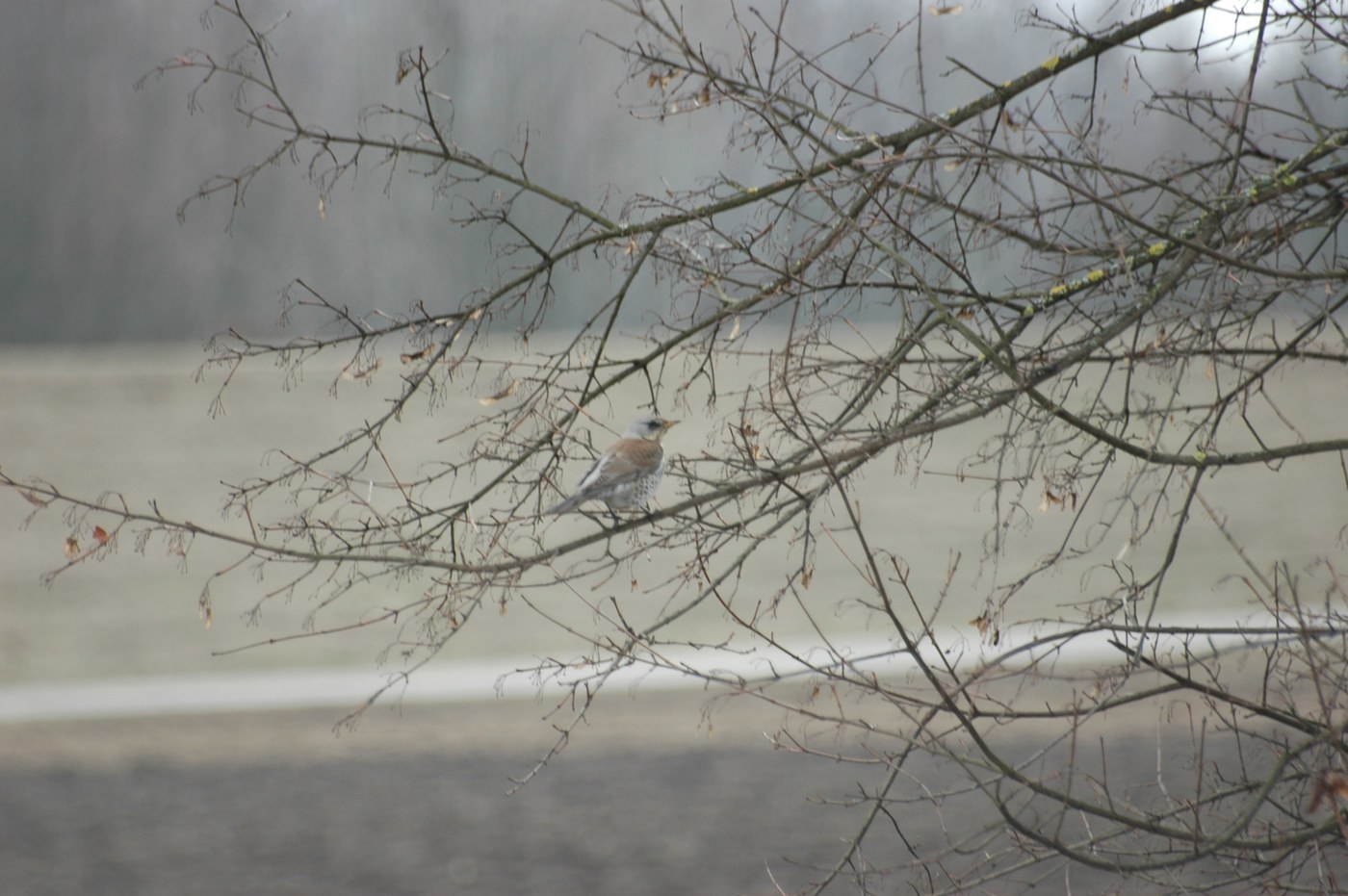
What Fieldfare's Feathers Look Like
Fieldfare is a large, boldly patterned thrush, and its feathers show more color contrast than most other European thrushes. Head and nape feathers are a clean blue-gray, contrasting sharply with a rich chestnut-brown back and wing covert feathers, an unusual and diagnostic two-tone combination among European thrushes. The rump is also gray, matching the head, while the tail is solid blackish-brown, providing a strong dark contrast against the pale gray rump when the tail is spread or when a rump feather is compared with a tail feather. Breast feathers are yellowish-buff with bold blackish spotting and chevron markings, more heavily marked than many related thrushes, fading to white with black spots on the flanks. Flight feathers are dark brown, moderately long, consistent with a strong-flying, partially migratory thrush.
Step-by-Step: Is This Feather From a Fieldfare?
- Check for gray head/nape feathers: a clean blue-gray feather from the head or rump, distinctly different in color from the back, is a strong Fieldfare signal.
- Look for chestnut back feathers: a rich chestnut-brown feather from the back or wing coverts, contrasting with gray head/rump feathers, supports this identification.
- Assess the tail color: solid blackish tail feathers, notably darker than the gray rump, fit this species' pattern.
- Check breast spotting: bold blackish spots or chevrons on a yellowish-buff background indicate heavier spotting than most similarly sized thrushes.
- Consider size: Fieldfare is a large thrush, so feathers should run larger than Redwing or Song Thrush feathers.
Similar Species & How to Tell Them Apart
Redwing, which often flocks together with Fieldfare in winter, is notably smaller, lacks the gray head/chestnut back contrast (its upperparts are a more uniform olive-brown), and shows distinct reddish-orange flank and underwing feathers, a color Fieldfare never shows. Mistle Thrush is large like Fieldfare but shows uniformly grayish-brown upperparts with no gray-versus-chestnut contrast, plus white corners on the tail feathers, a pattern absent in Fieldfare's solid dark tail. Song Thrush is smaller and warmer brown overall, with smaller, more delicate breast spotting and no gray head or chestnut back contrast at all. The combination of gray head and rump against a chestnut back, paired with a solid blackish tail, is essentially unique to Fieldfare among common European thrushes.
Where & When You'll Find Them
Fieldfare breeds across northern and eastern Europe and Asia in birch woodland, forest edge, and scrub, and migrates south and west in large flocks for the winter, becoming a familiar sight in farmland, hedgerows, and berry-laden hedges across much of Western Europe including the UK. Feathers are most likely to be found in winter (roughly October-March) in exactly these habitats, especially around hawthorn hedges and berry bushes where large feeding flocks gather, sometimes alongside Redwings. On the breeding grounds further north and east, feathers can be found in birch and mixed forest during the summer breeding season. The main molt occurs in late summer, after breeding and before the southward migration.
Frequently asked questions
What is the standout feather feature for Fieldfare?
The contrast between a clean gray head/rump and a rich chestnut-brown back, paired with a solid blackish tail, a combination unique among common European thrushes.
How is it different from Redwing feathers, since they often flock together?
Redwing is notably smaller, lacks the gray-and-chestnut contrast, and shows distinctive reddish-orange flank and underwing feathers that Fieldfare never has.
Are Fieldfare's breast feathers heavily marked?
Yes, the breast is yellowish-buff with bold blackish spots and chevrons, more heavily patterned than in many similarly sized thrushes.
When is the best time to find Fieldfare feathers in Western Europe?
Winter, roughly October through March, when large migratory flocks feed in hedgerows and berry bushes.
How can I rule out Mistle Thrush?
Mistle Thrush lacks the gray head/chestnut back contrast, showing instead uniform grayish-brown upperparts, and it has white corners on its tail feathers that Fieldfare lacks.