
How to Identify European Serin Feathers
A guide to the tiny, heavily streaked yellow-green feathers of Europe's smallest common finch, with the yellow rump patch as the key clincher.
Read the full European Serin encyclopedia entry →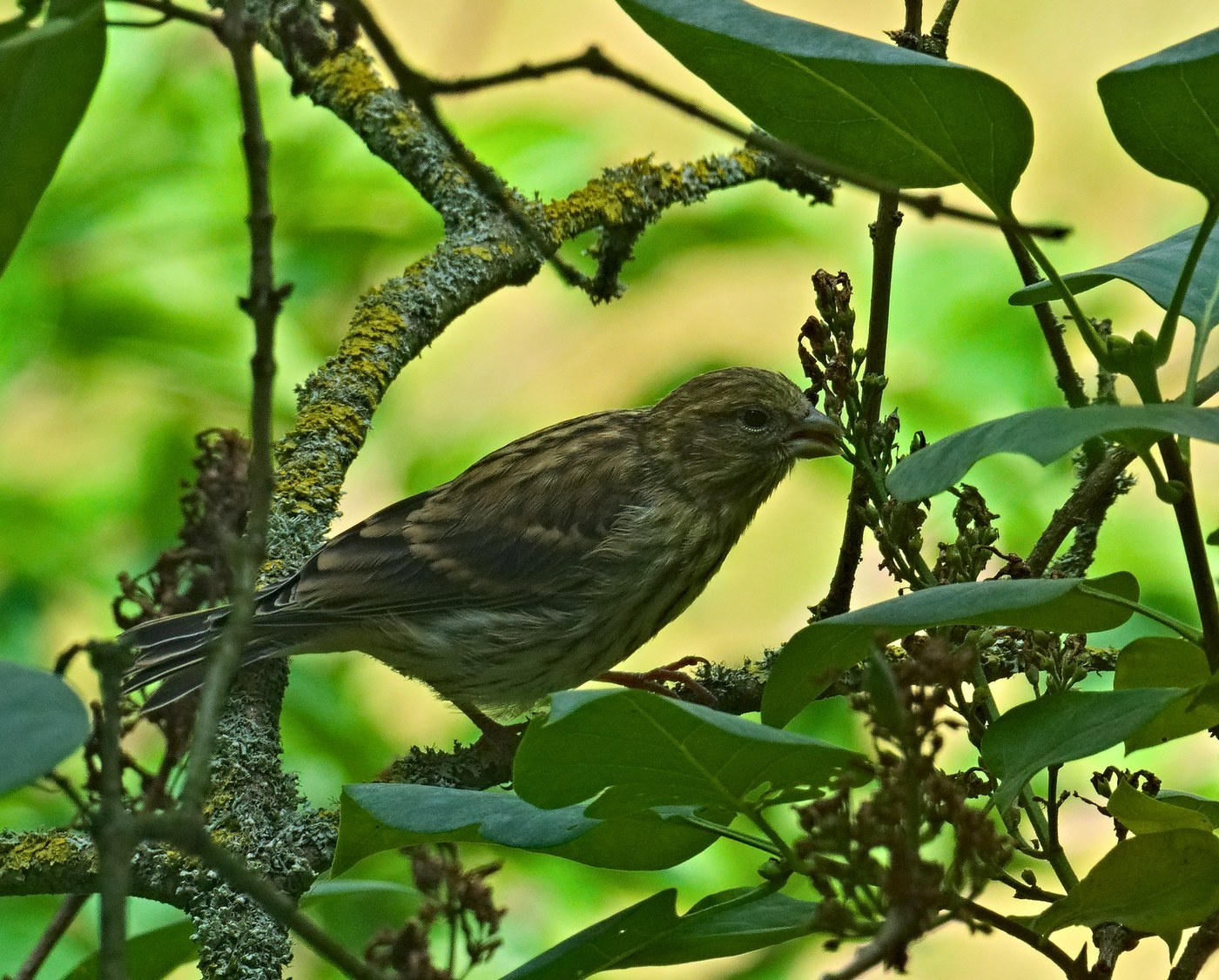
What European Serin Feathers Look Like
European Serin feathers belong to one of the smallest finches in Europe, and everything about them reads as compact and delicate — body feathers typically 1.5-2.5 cm, primaries rarely over 5-6 cm. The overall color is a bright yellow-green, heavily overlaid with fine dark streaking on the crown, back, breast, and flanks — noticeably streakier throughout than the plainer-bodied Greenfinch. The single best diagnostic feather is from the rump: Serins show a distinctive bright yellow rump patch, clean and unstreaked, that contrasts sharply with the streaky back above it and is conspicuous even in flight — a feature not shared by most similarly colored small finches. The face and throat show the brightest, cleanest yellow tone on the bird, fading to more heavily streaked yellow-green on the flanks and belly. Wing feathers are dark with narrow pale yellowish wingbars, thinner and less bold than the wing markings of Siskin or Greenfinch.
Step-by-Step: Is This Feather From a European Serin?
- Check overall size first. If the feather is unusually tiny — smaller than a typical finch feather — Serin should be near the top of the list.
- Look for heavy streaking throughout. Fine dark streaks covering the crown, back, and flanks (not just the back) is more extensive than in Greenfinch or Siskin.
- Check for a clean yellow rump patch. If the feather in hand is specifically from the rump and shows unstreaked bright yellow, this is close to a confirmed Serin ID.
- Assess wing markings. Thin, narrow pale wingbars (not bold yellow patches) fit this species.
- Consider habitat. Found in warm, open scrubby country, gardens, orchards, or parkland with conifers in southern/central Europe supports Serin, especially outside the core range of Siskin (which prefers cooler, denser conifer forest).
Similar Species & How to Tell Them Apart
- Eurasian Siskin feathers are similar in yellow-green tone but show a bolder black-and-yellow wing contrast and lack the clean yellow rump patch, plus Siskin favors cooler northern/montane conifer forest rather than Serin's warmer, more open habitat.
- European Greenfinch feathers are considerably larger and plainer, with much less streaking overall and no distinct yellow rump patch, reflecting Greenfinch's bulkier build.
- European Goldfinch feathers show a red-black-white head pattern entirely absent in Serin, plus a broader gold wingbar rather than Serin's thin, narrow wing markings.
- Citril Finch, a scarcer montane relative in parts of southern Europe, shows a grayer head and less streaking than Serin, with a duller, less contrasting yellow rump — range and habitat (Citril Finch favors higher mountain conifer zones) help separate the two where they might overlap.
Where & When You'll Find Them
European Serins favor warm, open habitats with scattered trees — orchards, vineyards, parks, gardens, and scrubby woodland edge — across southern and central Europe, with northern range limits having expanded in recent decades. Many populations in the north and east of the range are migratory, wintering further south and returning to breed from March through April, while southern populations are largely resident. Feathers are most findable in spring through summer in breeding territories, particularly near song posts (males sing persistently from treetops and wires) where feather wear from constant display activity accumulates, and again in early autumn, following the post-breeding molt, before migratory populations depart for wintering areas around the Mediterranean.
Frequently asked questions
What's the single best feather to confirm European Serin?
A rump feather showing a clean, unstreaked bright yellow patch — this specific feature is a strong, fairly unique confirming clue for the species.
How do I tell Serin from Siskin feathers?
Serin lacks Siskin's bold black-and-yellow wing contrast and instead shows finer overall streaking plus a distinct yellow rump patch that Siskin does not have.
Is Serin present year-round across Europe?
Southern populations are largely resident, but northern and eastern populations migrate, wintering further south and returning to breed in spring, so timing of feather finds depends on location.
How does Serin compare in size to Greenfinch?
Serin is noticeably smaller and more heavily streaked throughout, while Greenfinch is bulkier, plainer, and lacks the distinct yellow rump patch.
Where should I look for Serin feathers?
Near song posts in orchards, vineyards, parks, and gardens with scattered trees in warm, open parts of southern and central Europe.