
How to Identify Eurasian Spoonbill Feathers
A guide to the clean white body plumes and flight feathers of this large wading bird, with tips for telling adult from juvenile feathers and separating them from egrets.
Read the full Eurasian Spoonbill encyclopedia entry →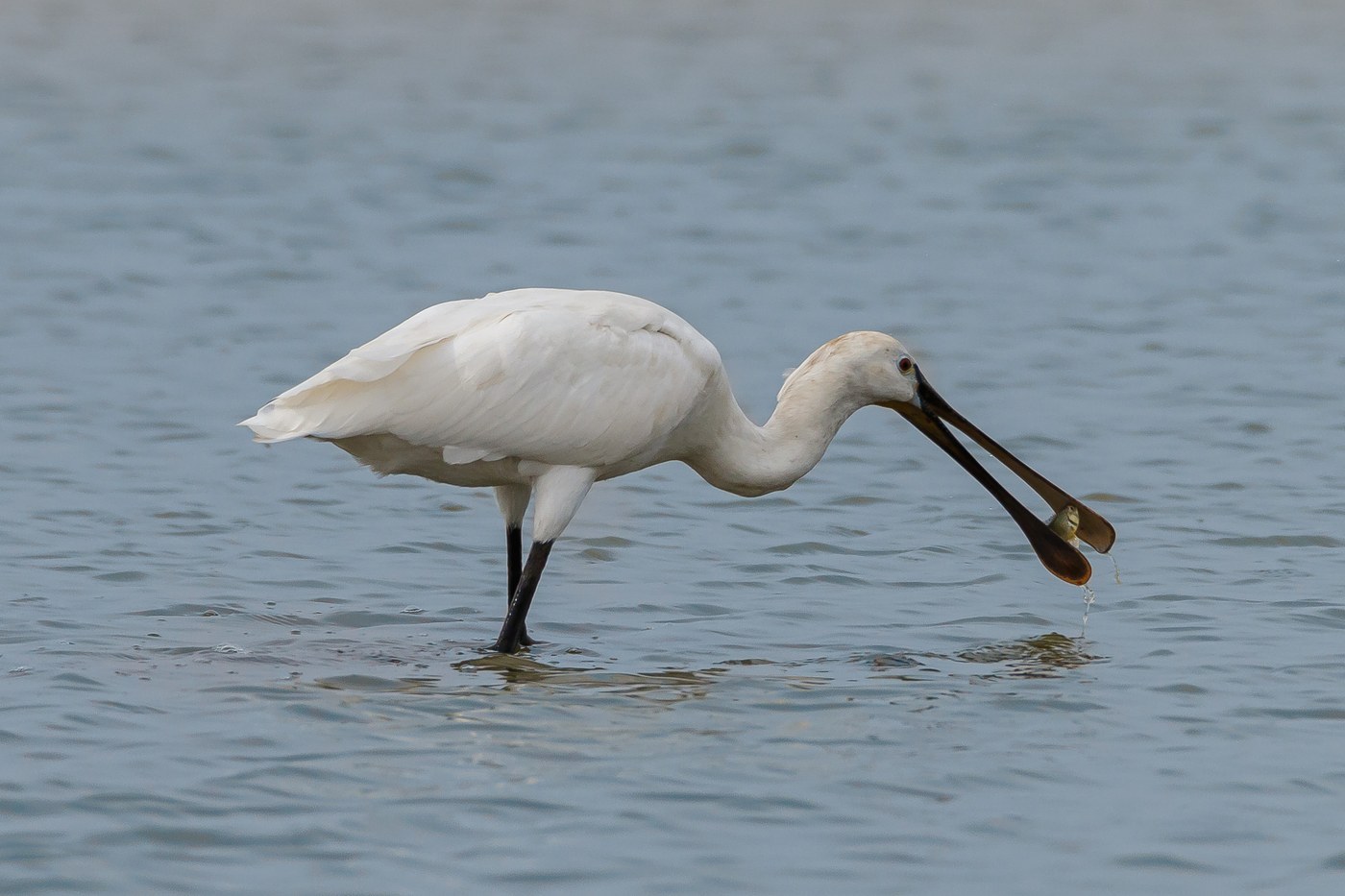
What Eurasian Spoonbill Feathers Look Like
Adult Eurasian Spoonbill feathers are essentially pure white throughout, body and flight feathers alike, reflecting this large wading bird's all-white breeding and non-breeding plumage. Body feathers are broad and somewhat loose-textured; in breeding adults, elongated feathers on the nape form a shaggy crest, and feathers on the breast can show a faint pale buff or yellowish wash at the base, especially during the breeding season — a subtle clue worth checking under good light. Flight feathers (primaries reaching roughly 25-30 cm) are strong, broad, and purely white in adults, built for long-distance soaring flight on thermals during migration. Juvenile Spoonbills show a key difference: their primary and outer wing feathers have black tips, a feature that fades as the bird matures over its first few years — so a white feather with a crisp black tip is a strong sign of an immature bird rather than an adult.
Step-by-Step: Is This Feather From a Eurasian Spoonbill?
- Check for all-white color. A large, pure white feather is the starting point; any strong color patch rules out Spoonbill.
- Look for a black tip. Present = juvenile Spoonbill (or possibly another white wader — see below); absent with an even white color = likely adult.
- Check for a faint yellow-buff wash at the feather base. This subtle tint, especially on breast feathers, supports Spoonbill over a similarly sized white egret.
- Measure size and feel texture. Long (25-30 cm), sturdy flight feathers versus more slender egret feathers reflect Spoonbill's larger, heavier-bodied build.
- Note the site. Found near shallow lagoons, estuaries, or wetland colonies (often nesting alongside herons and egrets) supports a Spoonbill origin.
Similar Species & How to Tell Them Apart
- Great Egret feathers are also pure white but tend to be more slender and elongated, especially the ornamental breeding plumes (aigrettes), which are finer and more filamentous than a Spoonbill's broader, more solid-webbed feather.
- Little Egret feathers are smaller overall and lack any yellow-buff wash, and this species is considerably more petite than Spoonbill throughout.
- Whooper/Mute Swan down and body feathers are also white but are much larger, denser, and softer overall, reflecting a far bigger bird, and lack the black-tipped juvenile primary pattern of young Spoonbills.
- White Stork flight feathers show bold black on the flight feathers as a fixed adult pattern (black primaries/secondaries contrasting with a white body), not just a fading juvenile trait as in Spoonbill, making the amount and permanence of black the key difference.
Where & When You'll Find Them
Eurasian Spoonbills breed colonially in reedbeds, low bushes, and small trees around shallow lagoons, estuaries, and wetlands across parts of western and southern Europe, with many populations migrating to wintering grounds in the Mediterranean basin and West Africa. Feathers are most likely found near breeding colonies in spring and early summer, when nest-building and chick-rearing activity sheds both adult and downy juvenile feathers, and again in late summer through autumn as birds molt before migration. Check the margins of shallow, muddy lagoons and estuary mudflats where Spoonbills sweep their bills side-to-side while feeding — feathers often drift into the same shallow water edges where the birds spend most of their time.
Frequently asked questions
What does a black tip on an otherwise white feather mean?
It usually indicates a juvenile Eurasian Spoonbill, since young birds carry black-tipped outer wing feathers that gradually fade to pure white as they mature.
How is a Spoonbill feather different from an egret feather?
Spoonbill feathers are broader and sturdier with a possible faint yellow-buff wash at the base, while egret feathers, especially breeding plumes, are finer, longer, and more filamentous.
Do adult Spoonbills ever show any color besides white?
Only a subtle yellowish or buff tinge at the base of some breast feathers during the breeding season — otherwise the plumage is uniformly white.
Where is the best place to look for these feathers?
Around the muddy edges of shallow lagoons, estuaries, and wetland breeding colonies where Spoonbills feed and nest, especially in spring and early summer.
How does a Spoonbill feather compare in size to a swan feather?
It's considerably smaller and less dense — swan feathers come from a much larger, heavier bird and feel noticeably bulkier and softer.