
How to Identify Common Snipe Feathers
A guide to the boldly striped back feathers and barred tail of the Common Snipe, and how to separate it from Jack Snipe and Woodcock.
Read the full Common Snipe encyclopedia entry →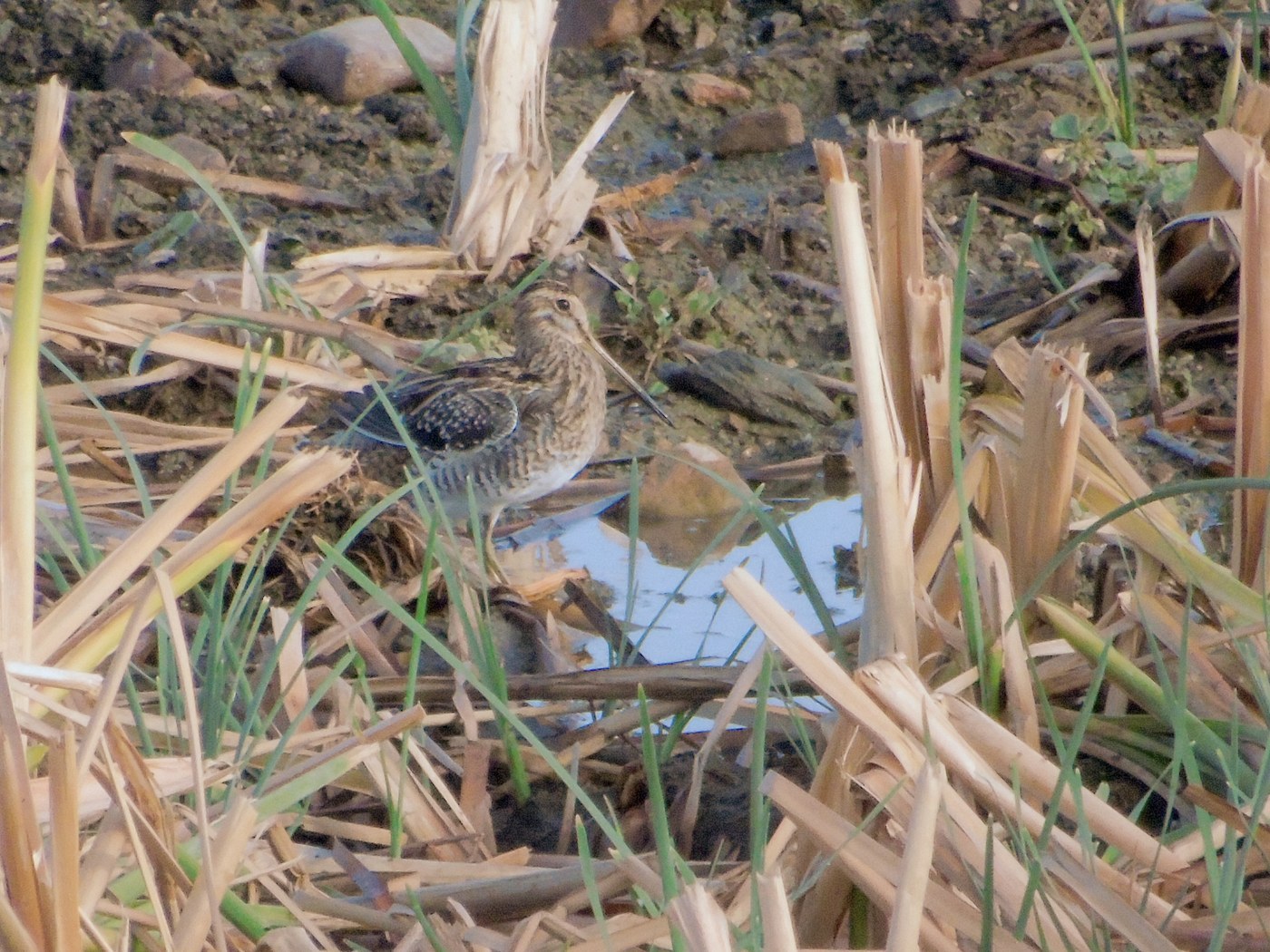
What Common Snipe Feathers Look Like
The Common Snipe is a marsh-dwelling shorebird with one of the most striking camouflage patterns among wading birds, built around bold, lengthwise stripes rather than the mottled patterns typical of many other shorebirds. Back and scapular feathers are dark brown edged with bold buff or cream stripes, and when these feathers lie in their natural overlapping position on the bird, they create distinct pale "braces" running down the length of the back — an isolated scapular feather showing a strong, clean buff edge against a dark brown center is a strong snipe indicator. Flank feathers are barred rather than striped, showing narrower dark bars across a paler background, a useful secondary pattern distinct from the back.
The tail feathers are a key diagnostic: barred rufous-brown with a band of white near the tip, visible as a pale terminal band that shows prominently during the bird's display flights. The bill is very long (roughly 6-7 cm), and while bill sheath itself isn't a feather, the facial feathering around such a long bill base is distinctive in proportion. Belly feathers are clean white, contrasting against the heavily patterned upperparts and barred flanks.
Step-by-Step: Is This Feather From a Common Snipe?
- Check back/scapular feather pattern. Bold buff or cream stripes running along the edge of a dark brown feather (not mottling) is the primary snipe clue.
- Examine flank feathers. Narrower dark bars across a paler background, distinct from the back's striping, supports snipe.
- Look at the tail. Rufous-brown barred tail feathers with a pale or white band near the tip fit Common Snipe's display-flight tail pattern.
- Assess belly color. Clean white belly feathers contrasting with heavily patterned upperparts is consistent with this species.
- Rule out golden/purple back stripes. A more golden or purple-iridescent back stripe pattern, rather than plain buff, points to Jack Snipe instead.
- Consider the habitat. Feathers found in marshes, wet meadows, or boggy ground fit Common Snipe's preferred habitat well.
Similar Species & How to Tell Them Apart
Jack Snipe is smaller overall, with a notably shorter bill, and its back stripes show a more golden or even faintly purple iridescent sheen compared to Common Snipe's plainer buff stripes; critically, Jack Snipe lacks the white terminal tail band that Common Snipe shows in its outer tail feathers. Wilson's Snipe, the North American counterpart, is extremely similar and the differences are subtle (slightly different tail feather count and a narrower white tail edge), making range the most practical distinguishing factor. Eurasian Woodcock is much larger overall, with rounder wings and a more uniformly mottled (not lengthwise-striped) back pattern, plus proportionately broader, more rufous-barred feathers throughout rather than the snipe's crisp linear striping.
Where & When You'll Find Them
Common Snipe breed in marshes, wet meadows, bogs, and other soft, muddy wetland habitat across much of Eurasia, with northern populations migrating south to milder wetlands for the winter while some southern populations are resident. They undergo a complete molt after breeding, occurring either on the breeding grounds or shortly after arrival on early wintering areas, so feathers are most commonly found in late summer through early autumn in and around productive marsh and bog habitat used during this molting period.
Frequently asked questions
What's the clearest feather clue for identifying Common Snipe?
Look for a back or scapular feather with a bold buff or cream stripe running along a dark brown center — this striped pattern, rather than mottling, is the species' signature camouflage feature.
How do I tell a Common Snipe tail feather from a Jack Snipe tail feather?
Common Snipe shows a pale or white band near the tip of the tail feathers, which Jack Snipe lacks; Jack Snipe's back stripes also tend to show more golden or purple iridescence.
Why does my striped shorebird feather look different from a woodcock feather?
Eurasian Woodcock is larger with a more uniformly mottled back pattern rather than the crisp, lengthwise striping typical of Common Snipe, plus broader, more rufous-barred feathers overall.
Are flank feathers patterned the same way as back feathers in Common Snipe?
No, flank feathers show narrower dark bars across a paler background, distinct from the bold lengthwise striping seen on the back and scapular feathers.
When are Common Snipe feathers most likely to be found?
Late summer through early autumn, during the complete molt that follows breeding, concentrated in marsh and bog habitat.