
How to Identify Common Sandpiper Feathers
How to identify the plain brown back feathers and distinctive white shoulder patch of the Common Sandpiper, and separate it from Spotted Sandpiper.
Read the full Common Sandpiper encyclopedia entry →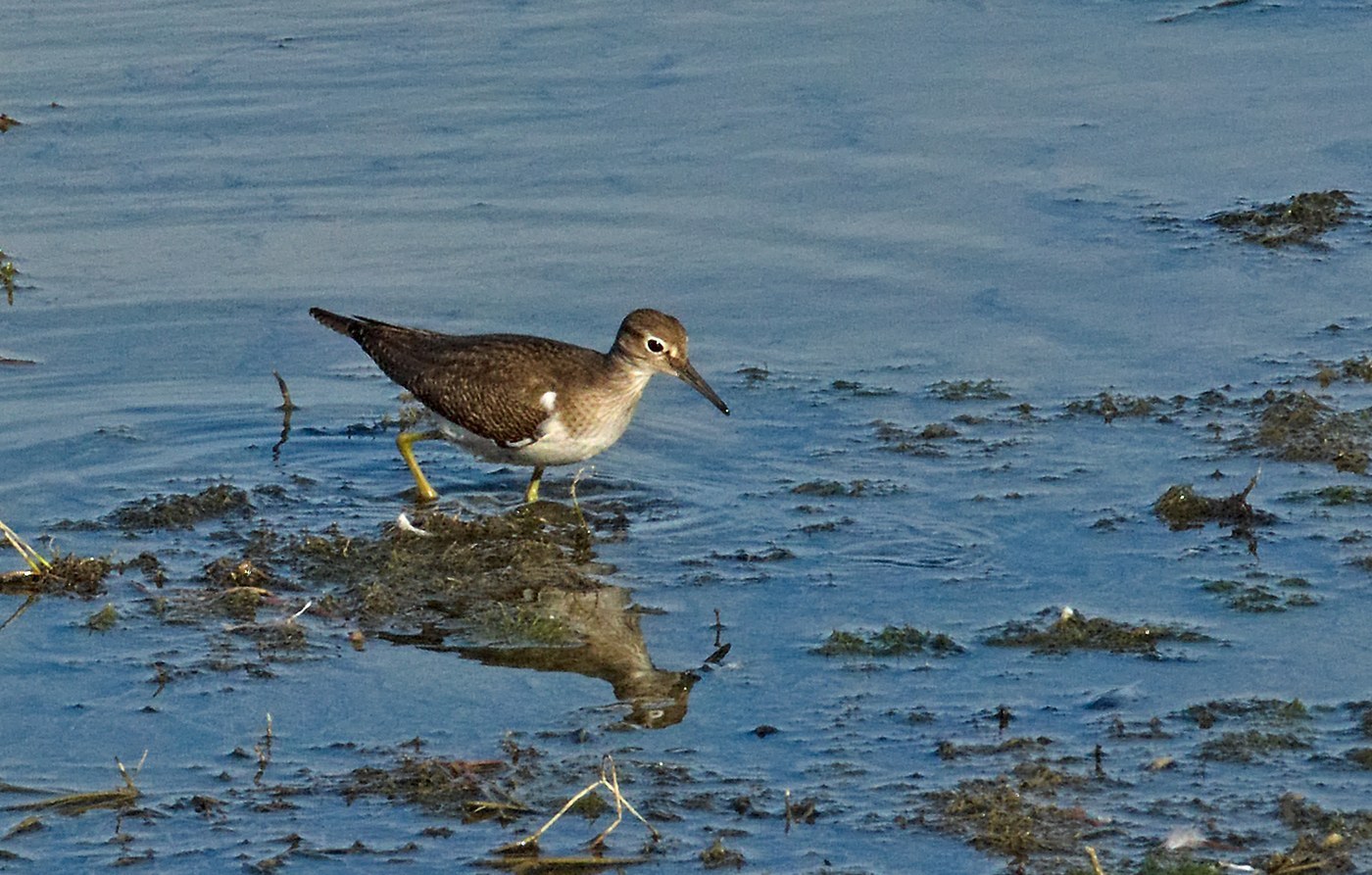
What Common Sandpiper Feathers Look Like
The Common Sandpiper is a small, active shorebird best known in life for its constant tail-bobbing, but its feathers carry their own reliable clues. Back and covert feathers are a plain brown with fine, subtle dark shaft streaks or faint barring — not a bold pattern, but a somewhat textured, quietly marked brown rather than perfectly smooth. Underpart feathers are white, and a key diagnostic detail is the shape of the brown breast-side patch: the white of the belly pushes upward as a distinct "hook" or notch between the folded wing and the breast, so a breast-side feather showing this indented white intrusion into the brown is a strong species clue.
The wing shows a white stripe across the flight feathers, but this bar is only really visible when the wing is spread — an isolated flight feather will show a white band or patch across an otherwise plain brown feather. Tail feathers are brown with white edges and some barring toward the outer feathers, and the tail is proportionately long relative to the bird's small size, consistent with its constant bobbing behavior in life.
Step-by-Step: Is This Feather From a Common Sandpiper?
- Check the breast-side pattern. Look for a brown patch on the side of the breast with a distinctive white "hook" notching upward into it from the belly — a strong Common Sandpiper clue.
- Examine covert/back feathers. Plain brown with only fine shaft streaking or faint barring (not bold or heavily marked) fits this species.
- Look for a white wing stripe. A flight feather with a white band crossing an otherwise brown feather supports Common Sandpiper.
- Assess tail feather length and pattern. Proportionately long brown tail feathers with white edging and some barring toward the outer feathers is consistent.
- Consider season for definitive plumage. Breeding adults have a spotted breast (though this is skin/plumage detail beyond isolated feathers); non-breeding birds are plainer, so don't rule out the species based on lack of spotting alone.
- Note the habitat. Feathers found along rivers, streams, and lake edges (rather than open coastal mudflats) fit this species' preferred freshwater habitat.
Similar Species & How to Tell Them Apart
Spotted Sandpiper, the North American counterpart, is extremely similar in feather structure and pattern — breeding adults are bolder with underside spotting, but non-breeding and juvenile birds can be nearly identical to Common Sandpiper. The most consistent distinguishing point in the hand is that Spotted Sandpiper's white wing stripe is somewhat shorter, not reaching as far toward the body, though this subtle difference is easier to see in a spread wing than in an isolated feather; range and season are often the more practical clues, since the two species' breeding ranges mostly don't overlap. Other small brown shorebirds (various small Tringa sandpipers) generally lack the specific combination of the white breast-side "hook" pattern together with the constant-bobbing body shape implied by the long tail.
Where & When You'll Find Them
Common Sandpipers breed along rivers, streams, and lake margins across a broad swath of Europe and Asia, and are long-distance migrants wintering in Africa, southern Asia, and Australia. They undergo a partial molt before autumn migration, with a complete molt occurring on the wintering grounds, so feathers found near breeding freshwater habitats in late summer tend to be somewhat worn, while fresher feathers are more likely on wintering shorelines later in the year.
Frequently asked questions
What's the most distinctive feather clue for a Common Sandpiper?
Look for a breast-side feather where white from the belly pushes upward as a hook or notch into an otherwise brown patch — a distinctive shape not shared by most other small shorebirds.
Can I reliably tell Common Sandpiper from Spotted Sandpiper using feathers?
It's difficult, especially outside the breeding season. The white wing stripe is somewhat shorter in Spotted Sandpiper, but range and season are often more practical clues than the feather pattern alone.
Why is the back feather I found so plain compared to other shorebirds?
Common Sandpiper naturally has a fairly plain brown back with only fine shaft streaking or faint barring, rather than the bold patterning seen in many other shorebird species.
Does the white wing stripe show on a single feather, or only in flight?
An isolated flight feather can still show a clear white band crossing an otherwise brown feather, even though the full stripe effect is most visible when the wing is spread in flight.
When are Common Sandpiper feathers most likely near breeding rivers?
Late summer, during the partial molt that precedes the species' long migration to wintering areas in Africa, southern Asia, or Australia.