
How to Identify Common Greenshank Feathers
A guide to recognizing the pale grey-brown, spangled feathers and white rump/back of this large, widespread Eurasian shorebird.
Read the full Common Greenshank encyclopedia entry →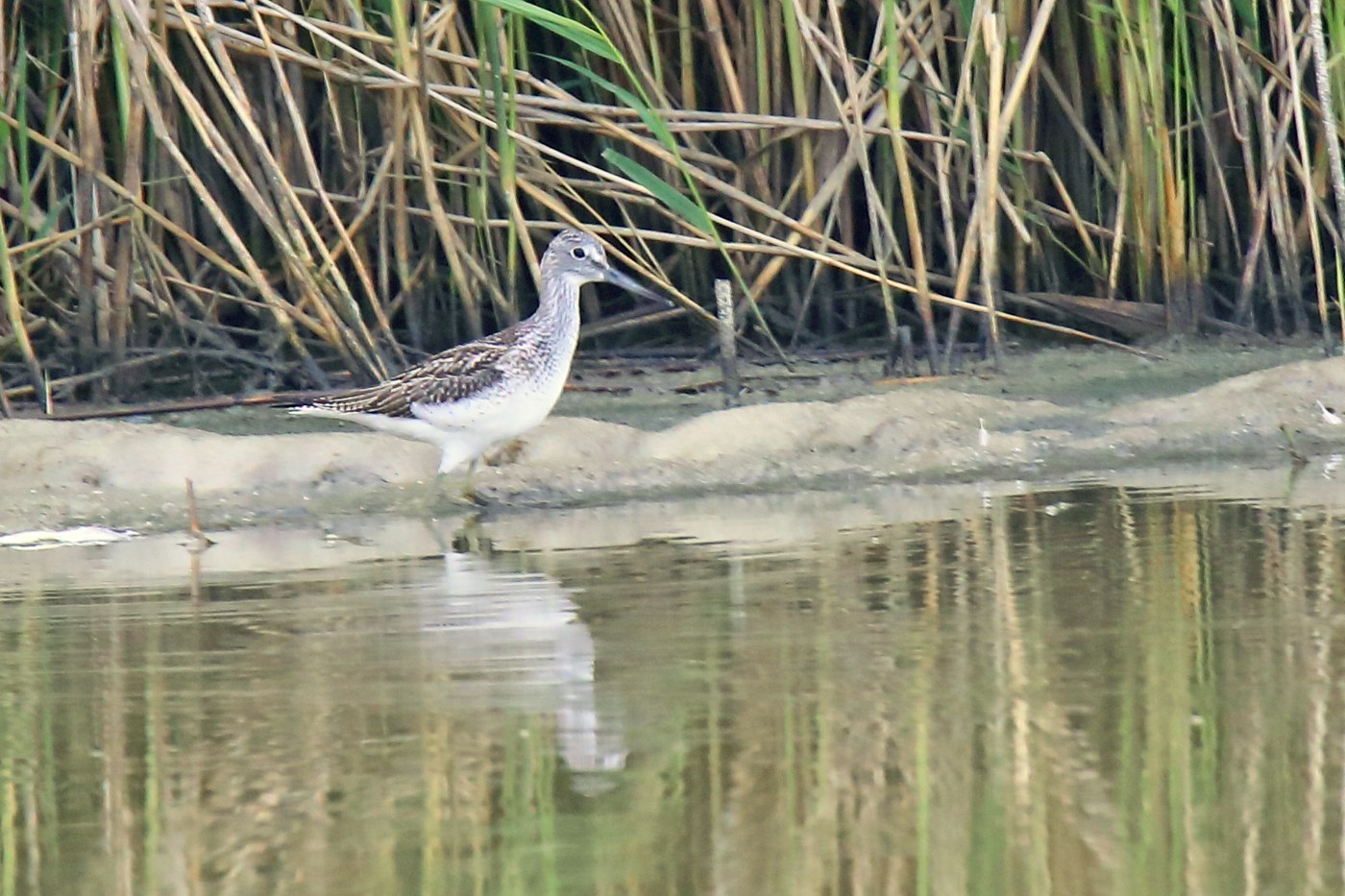
What Common Greenshank's Feathers Look Like
The Common Greenshank is a tall, elegant shorebird found across wetlands and coastlines from Europe to Asia and Africa on migration, and its feathers are patterned for a life spent wading in open mudflats and marshes. Breeding-plumage upperpart feathers are grey-brown to blackish-grey with pale notches and spotting along the edges, giving a somewhat scaled or spangled appearance, while non-breeding (winter) feathers are plainer pale grey with less contrast. Underparts are largely white, with fine dark streaking confined mostly to the breast and flanks in breeding birds.
A key diagnostic feather is from the lower back and rump, which shows a distinct white wedge extending up the back — visible in flight as a bright white triangle and useful when comparing a loose feather's position and pale coloring to this pattern. The tail is pale grey-white with fine, narrow dark barring, finer than in many other similarly sized shorebirds. Flight feathers (primaries) are blackish and contrastingly darker than the paler body and covert feathers, and overall feather texture is fairly firm, consistent with a long-legged, long-billed wading bird.
Step-by-Step: Is This Feather From a Common Greenshank?
- Check for pale, spangled upperpart feathers. Grey-brown with pale notched edges (breeding) or plain pale grey (non-breeding), rather than bold rufous or black-and-white, fits this species.
- Look for a white rump/back feather. A clean white feather from the lower back area supports the diagnostic white rump wedge.
- Measure it. Flight feathers run about 12–16 cm, consistent with a mid-sized to large shorebird, notably bigger than small sandpipers.
- Assess tail barring. Fine, narrow dark bars on a pale grey-white ground, rather than bold blocky bands, fits Greenshank.
- Compare underparts. Mostly white with light streaking only on the breast/flanks, not heavily patterned, is consistent with this species.
- Consider the setting. A feather found on mudflats, coastal marshes, or inland wetlands during migration or winter across the species' broad Old World range fits Common Greenshank.
Similar Species & How to Tell Them Apart
The Greater Yellowlegs, its New World counterpart and ecological equivalent, is very similar in plumage pattern but occurs in the Americas rather than the Old World, so range is the primary separator; Greenshank also tends to show a slightly greener, less yellow, leg tone (a soft-tissue feature, not on the feather). The Marsh Sandpiper, sharing much of the Old World range, is smaller and more delicately built, producing noticeably smaller, finer feathers. The Spotted Redshank, especially in breeding plumage, shows much darker, more uniformly blackish body feathers rather than Greenshank's paler, spangled pattern. Overall structure — a fairly large, pale, white-rumped shorebird feather — is the most useful combination to distinguish Greenshank from smaller or darker sandpipers.
Where & When You'll Find Them
Common Greenshanks breed in subarctic bogs and open taiga across northern Europe and Asia, then migrate widely to winter on coastlines and wetlands throughout Africa, southern Asia, and Australasia, making them one of the most widespread Old World shorebirds. Feathers are most likely to be found during migration periods (spring and autumn) at stopover wetlands and estuaries, and throughout the winter months on wintering mudflats and coastal marshes farther south, with additional feathers near breeding bogs in summer during the molt.
Frequently asked questions
What's the best single clue for a Common Greenshank feather?
A pale grey-brown, spangled or notched-edge feather combined with a clean white feather from the lower back/rump area is a strong combination pointing to this species.
How do I tell it from a Greater Yellowlegs feather?
The two species are very similar in pattern, but Greater Yellowlegs occurs only in the Americas while Common Greenshank is an Old World species, so geography is usually the deciding factor.
Why does the tail barring look so fine compared to other shorebirds?
Common Greenshank shows notably narrow, closely spaced dark bars on a pale ground, finer than the bolder banding seen in some other similarly sized sandpipers and shanks.
How large should I expect the feathers to be?
Flight feathers around 12–16 cm, fitting a mid-sized to large shorebird — bigger than small sandpipers but smaller than large curlews or godwits.
When are Common Greenshank feathers most likely to be found?
During spring and autumn migration at stopover wetlands, throughout winter on wintering mudflats and coastal marshes, and near breeding bogs in summer during the molt.