
How to Identify Clay-colored Sparrow Feathers
Identify a Clay-colored Sparrow feather through its streaked crown with a pale central stripe, dark-bordered buffy cheek patch, and plain gray unstreaked nape.
Read the full Clay-colored Sparrow encyclopedia entry →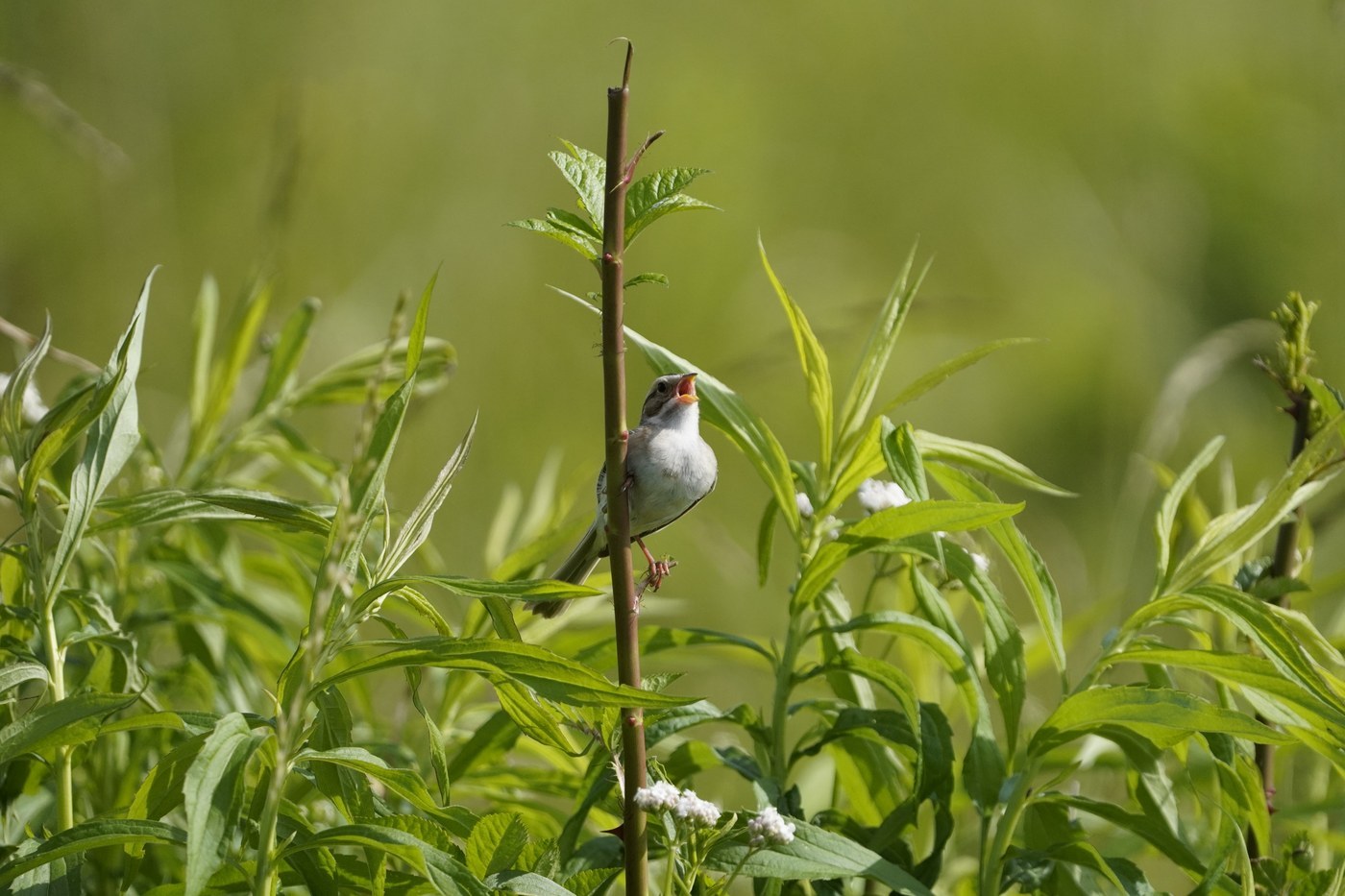
What Clay-colored Sparrow Feathers Look Like
Clay-colored Sparrow is a close relative of Chipping Sparrow, and the two are best separated by face and crown pattern rather than overall color. The crown is streaked brown with a pale central stripe running front to back — quite different from Chipping Sparrow's solid rufous cap. The face shows a buffy-brown cheek patch (auriculars) clearly outlined by a dark brown moustachial stripe below and a darker border above, giving a distinctly "framed" look to the face.
The nape is plain gray and unstreaked, contrasting with the streaked crown and back — a useful transition point to check if you have a feather spanning that area. The back is streaked black, brown, and buff for camouflage, while the underparts are a soft buffy-gray, unstreaked. The tail is plain brown with a shallow notch.
Step-by-Step: Is This Feather From a Clay-colored Sparrow?
- Check the face pattern first: a buffy cheek patch bordered by dark brown stripes above and below is the most diagnostic single feature.
- Examine the crown: streaked brown with a pale central stripe, not a solid rufous cap.
- Look for a gray, unstreaked nape feather: contrasts against the streaked crown and back.
- Confirm underparts: buffy-gray and unstreaked, without spotting.
- Consider habitat: shrubby prairie, brushland, or grassland with scattered shrubs in central North America.
Similar Species & How to Tell Them Apart
- Chipping Sparrow: breeding adults have a solid, unstreaked rufous crown and a plainer gray face with a bold black eyeline, lacking Clay-colored's buffy, dark-bordered cheek patch.
- Brewer's Sparrow: very similar overall, but its face pattern is less contrasty and more finely streaked, often with a more prominent pale eye-ring, and it lacks the bold dark whisker stripe framing the cheek.
- American Tree Sparrow: larger, with a rufous cap and a distinct dark central breast spot that Clay-colored Sparrow never shows.
Where & When You'll Find Them
Clay-colored Sparrows breed in brushy grasslands, shrub-steppe, and prairie shrub habitat across the north-central United States and Canadian prairie provinces. They're migratory, wintering in Mexico, Texas, and along the Gulf Coast. Post-breeding molt occurs in August and September before migration, so feathers are commonly found in shrubby prairie or farmland edge habitat during the breeding season, and at migration stopover sites in brushy cover during fall.
Look specifically along the edges of shelterbelts, brushy fence lines, and low shrub thickets bordering open prairie, since this species avoids both dense forest and completely open grassland, preferring that in-between shrubby zone. During migration, birds often join loose flocks with other sparrows in weedy fields and hedgerows, so a Clay-colored Sparrow feather may be found mixed among feathers of several other sparrow species at a single stopover site.
Frequently asked questions
What's the fastest way to separate this from a Chipping Sparrow feather?
Check the crown: Chipping Sparrow shows a solid, unstreaked rufous cap, while Clay-colored Sparrow's crown is streaked brown with a pale central stripe, paired with a bolder, dark-framed buffy cheek patch.
How does the nape feather help with identification?
Clay-colored Sparrow has a plain gray, unstreaked nape that contrasts with its streaked crown and back — a helpful transition point if the feather spans both areas.
Is this species found in wooded backyards like Chipping Sparrow?
Less often — Clay-colored Sparrow favors shrubby prairie, brushland, and grassland with scattered shrubs rather than the woodland edges and suburban yards Chipping Sparrow prefers.
When would feathers most likely be found in fall?
During migration stopovers in brushy or scrubby cover, as birds move from prairie breeding grounds to wintering areas in Mexico, Texas, and the Gulf Coast.