
How to Identify Chipping Sparrow Feathers
Distinguish a Chipping Sparrow feather using its clean rufous crown, plain unstreaked gray breast, and two whitish wingbars against streaked brown look-alikes.
Read the full Chipping Sparrow encyclopedia entry →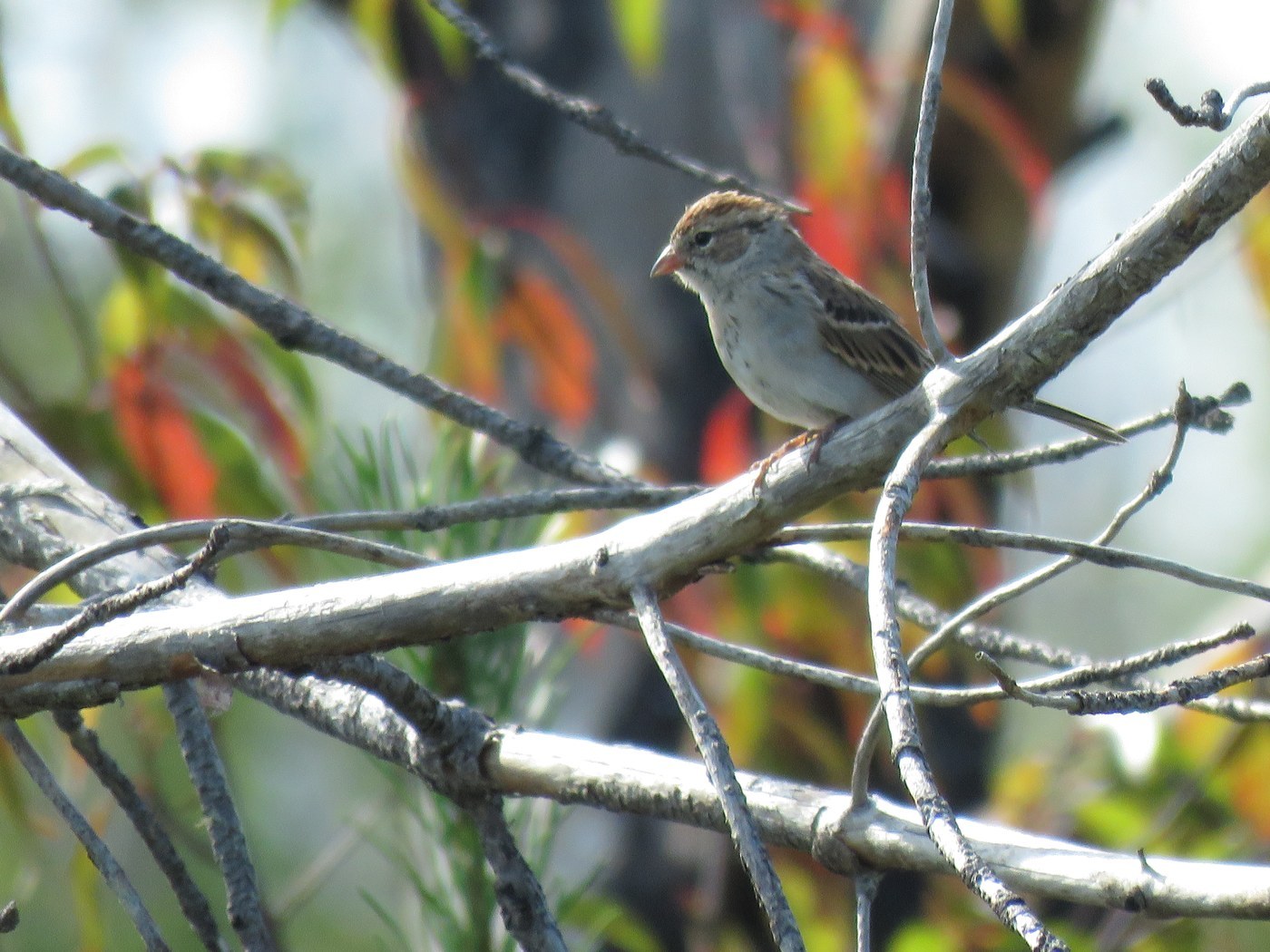
What Chipping Sparrow Feathers Look Like
Chipping Sparrows are small, slim sparrows best known for a bright rufous-chestnut crown in breeding adults — a solid, unstreaked cap feather that stands out from the streakier crowns of most other sparrows. The face is gray with a black eyeline running through the eye, framed by a pale supercilium.
The back and scapular feathers are streaked black, brown, and buff, typical sparrow camouflage, but the underparts are the real giveaway: the breast and belly feathers are plain, unstreaked gray, without the smudgy streaking many similar sparrows show. Wing coverts are brown with pale tips forming two thin whitish wingbars, and the tail is brown with a shallow notch.
Non-breeding adults and immatures show a duller, streaked grayish-brown crown rather than the bright solid rufous, so seasonal timing changes what a crown feather looks like.
Step-by-Step: Is This Feather From a Chipping Sparrow?
- Check the crown feather: solid chestnut-rufous with no streaking (breeding adult) is close to diagnostic on its own.
- Look at the breast/belly feather: plain gray, unstreaked — rules out the many streaky-breasted sparrows.
- Confirm the face pattern: gray cheek with a black line through the eye and pale eyebrow.
- Check wing coverts: brown with two clean whitish bars.
- Measure size: quite small, roughly 4.5-5.5 inches total bird length, so feathers are correspondingly petite and slim.
Similar Species & How to Tell Them Apart
- American Tree Sparrow: larger, with a rufous cap too, but shows a distinct dark central breast spot and a rustier, less clean overall look — Chipping Sparrow's breast is spot-free.
- Field Sparrow: has a plainer, pinkish-toned face without the bold black eyeline, and its crown is more diffusely rufous rather than a crisp solid cap.
- Clay-colored Sparrow: a close relative with a streaked crown showing a pale central stripe (not solid rufous), plus a buffy cheek patch bordered by dark whisker marks that Chipping Sparrow lacks.
Where & When You'll Find Them
Chipping Sparrows favor open woodlands, forest edges, conifers, parks, and suburban yards across most of North America. They breed from spring through summer, and their bright rufous crown feathers are at their crispest during this period near nesting territories. After breeding, a complete molt (July-September) produces a duller, streakier crown, and most populations migrate south to the southern US and Mexico for winter — so a bright solid-rufous crown feather points to breeding season in the temperate zone, while a duller streaked crown feather suggests fall or a wintering bird farther south.
This is one of the most common and tolerant sparrows around human habitation, frequently nesting in ornamental conifers, hedges, and shrubs close to houses, so feathers are often found on lawns, driveways, and porches rather than only in wilder habitat. Where its range overlaps with Clay-colored or Brewer's Sparrow in prairie regions, checking the specific crown and face pattern together remains the most reliable way to confirm which species a feather belongs to.
Frequently asked questions
Does every Chipping Sparrow show a bright rufous crown feather?
Only breeding adults show the crisp, solid chestnut cap; non-breeding adults and young birds have a duller, streaked grayish-brown crown, so absence of bright rufous doesn't rule out the species.
What's the single best feature to separate this from Clay-colored Sparrow?
The crown pattern: Chipping Sparrow's breeding crown is a solid rufous cap, while Clay-colored Sparrow's crown is streaked with a pale central stripe and paired with a bolder, dark-bordered buffy cheek patch.
Why does the unstreaked gray breast matter for identification?
Many similar small brown sparrows have streaked or spotted underparts; a plain, clean gray breast feather narrows the field considerably toward Chipping Sparrow and its closest relatives.
When would I find a duller, streaked crown feather instead of a bright rufous one?
After the post-breeding molt in late summer/fall, or on an immature bird — the crown becomes streaked and grayish rather than a solid bright cap.