
How to Identify Chinese Pond Heron Feathers
Spot a Chinese Pond Heron feather by the dramatic contrast between pure white flight feathers and dark chestnut or streaky brown body plumage that persists year-round.
Read the full Chinese Pond Heron encyclopedia entry →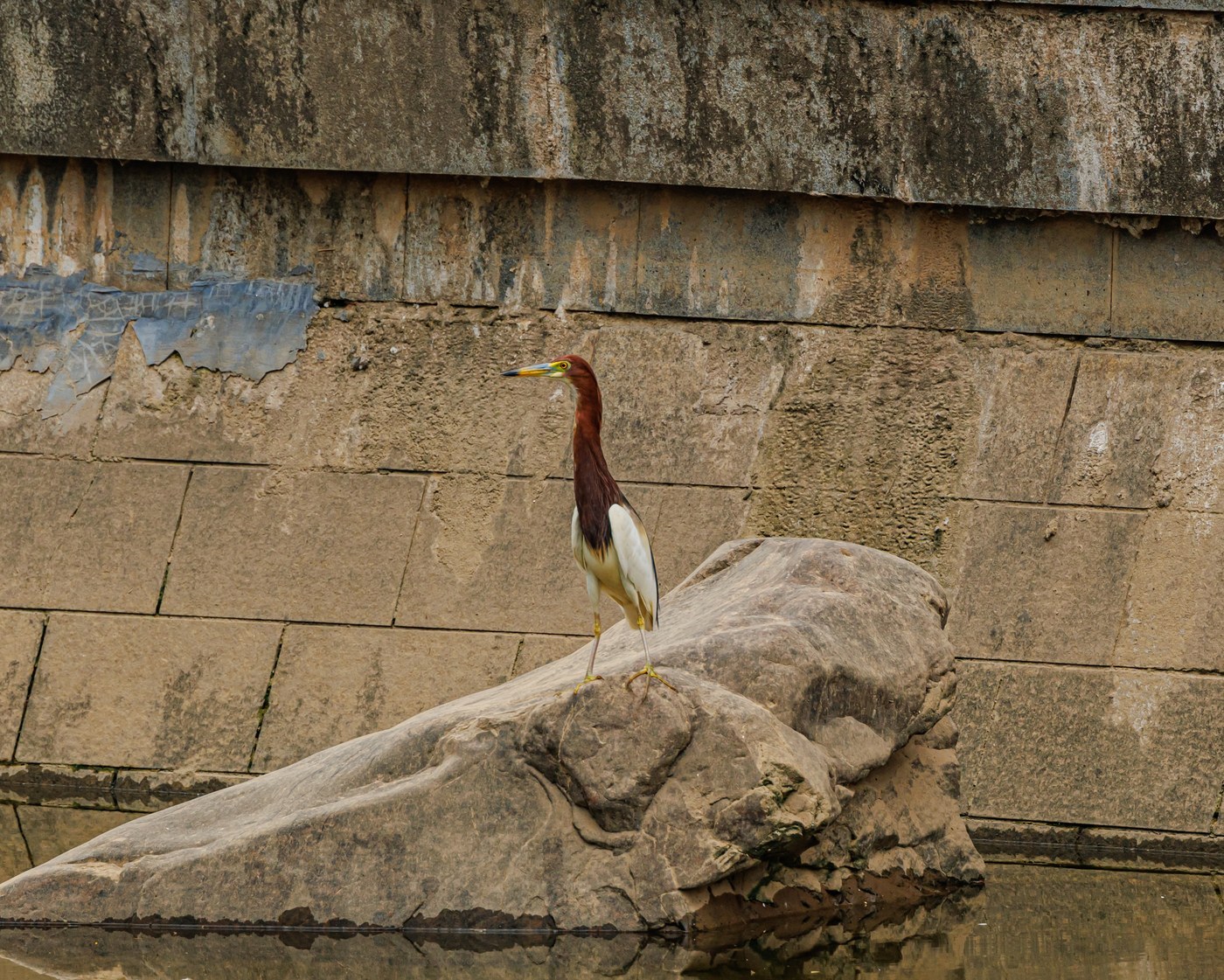
What Chinese Pond Heron Feathers Look Like
The Chinese Pond Heron is a small, stocky heron that looks almost entirely brown while standing still but flashes bright white wings the instant it takes flight — and that contrast is the key to identifying its feathers. The flight feathers (primaries and secondaries) are pure white year-round, regardless of season or age, because only the body plumage changes with breeding condition.
In breeding plumage, the head, neck, and breast turn a rich maroon-chestnut, and long, thin, wispy plumes (lanceolate feathers) grow from the crown, nape, and back, with the back plumes taking on a slaty blue-gray cast. In non-breeding (winter) plumage, the body feathers become a streaky buff-brown, giving strong camouflage among reeds and mud — but the wings stay white throughout.
Step-by-Step: Is This Feather From a Chinese Pond Heron?
- Check color contrast first: a pure white feather from a bird with an otherwise dark or streaky body points strongly to a pond heron rather than an all-white egret.
- Look for elongated, wispy plumes: thin, drooping lanceolate feathers (rather than typical rounded contour feathers) suggest breeding-season nape or back plumage.
- Note chestnut-maroon coloring: a deep reddish-brown body feather, especially with a silky or plume-like texture, indicates breeding-season head/neck plumage.
- Check for buff-brown streaking: mottled, streaky brown feathers with buffy edges indicate non-breeding plumage, still paired in life with white wings.
- Confirm habitat context: found near rice paddies, ponds, or marshes in East Asia strengthens the identification.
Similar Species & How to Tell Them Apart
- Indian Pond Heron / Javan Pond Heron: nearly identical structure and the same white-wing/dark-body pattern, but breeding head and neck color differs — Chinese Pond Heron is deep maroon-chestnut, while Indian Pond Heron trends more golden-buff to orange. Range is the best separator, since these species barely overlap.
- Cattle Egret: entirely white or white with buffy wash during breeding, never showing a dark chestnut or heavily streaked brown body — the pond heron's stark two-tone contrast (dark body, white wings) is not shared by any egret.
- Squacco Heron (further west): similarly patterned but with paler, more buffy-straw body tones rather than the pond heron's darker chestnut.
Where & When You'll Find Them
Chinese Pond Herons inhabit wetlands, rice paddies, ponds, and slow rivers across East Asia, including China, Korea, Japan, and parts of Southeast Asia in winter. They breed in spring and summer, molting into the streaky brown non-breeding plumage afterward, typically in late summer. Northern populations are migratory, moving into Southeast Asia for winter, so non-breeding-plumage feathers (streaky brown body, white wings) are the most common find outside the breeding season, while chestnut-maroon plume feathers are a spring/summer find near nesting colonies.
Frequently asked questions
Why do the wings stay white while the rest of the bird changes color?
The flight feathers (primaries and secondaries) don't undergo the same seasonal color change as the softer body and plume feathers — they stay white year-round, which is why the white-wing/dark-body contrast is reliable in any season.
I found a plain streaky brown feather with no chestnut at all — could it still be this species?
Yes, that's typical of non-breeding season plumage; pair that clue with any nearby pure white flight feathers found at the same site to confirm a pond heron rather than a generic brown wetland bird.
How can I tell this apart from a Cattle Egret feather?
Cattle Egrets are white (or white with a light buffy wash) all over and never show the pond heron's dark chestnut or heavily streaked brown body feathers.
When is the best time to find breeding-plumage plume feathers?
Spring and summer near active nesting colonies, when adults grow the long chestnut and slaty-blue lanceolate plumes on the head, neck, and back.