
How to Identify Cerulean Warbler Feathers
A step-by-step guide to identifying Cerulean Warbler feathers by their sky-blue back, double white wing bars, and white-spotted tail.
Read the full Cerulean Warbler encyclopedia entry →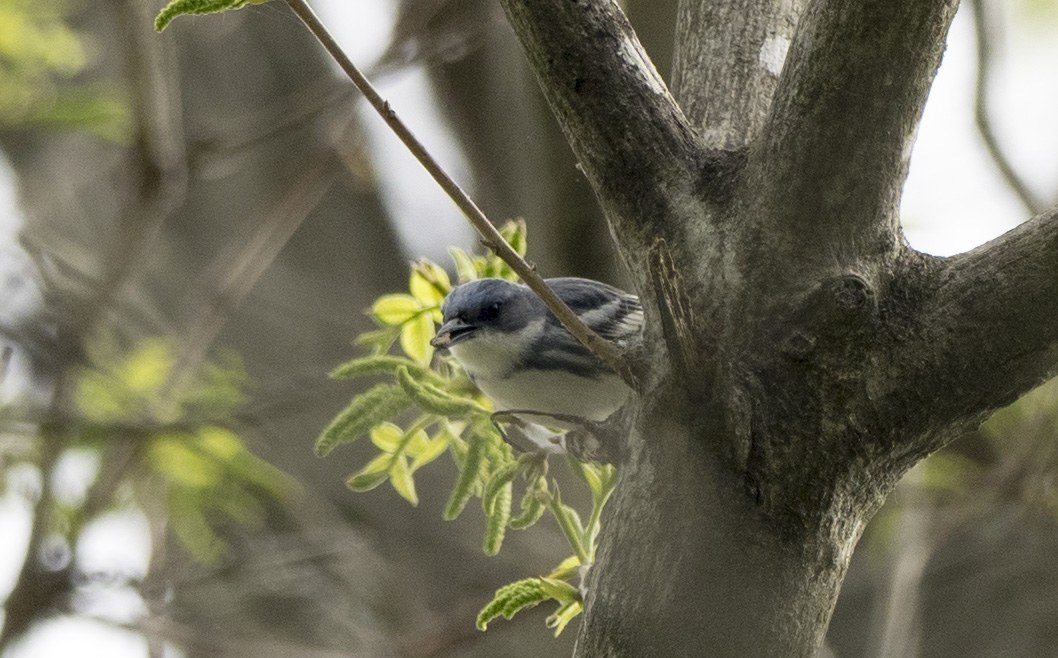
What Cerulean Warbler's Feathers Look Like
Male Cerulean Warblers have back and crown feathers of a striking sky-blue, with a thin black necklace of streaking across the upper breast and clean white underparts. Females and immatures are duller, showing a greenish-blue wash above with a pale whitish eyebrow instead of a bold blue crown. Both sexes share two bold white wing bars crossing black-edged wing covert feathers, and — a key diagnostic often overlooked — the outer tail feathers carry small white spots near the tip, visible from below when the tail is spread. Feather size is tiny, typical of a small canopy warbler: body contour feathers 2–3 cm, flight feathers 4–5 cm.
Step-by-Step: Is This Feather From a Cerulean Warbler?
- Check the color. A sky-blue (male) or blue-green/turquoise (female) back feather, rather than pure blue or olive-green, is the starting point.
- Look for the necklace. A back or throat-adjacent feather with fine black streaking on an otherwise white or pale breast supports this species in males.
- Inspect the wing. Two clean white wing bars on black-edged wing feathers is a strong secondary clue.
- Flip to the tail. White spots near the tip of an otherwise blue-gray tail feather, visible from the underside, are one of the most diagnostic features available.
- Measure size. Very small feathers (a few centimeters) fit this compact canopy warbler.
- Consider habitat context. A blue warbler-type feather found under mature deciduous canopy, especially near rivers, supports Cerulean over more common blue warblers.
Similar Species & How to Tell Them Apart
- Black-throated Blue Warbler male has a solid black face, throat, and flanks against deep blue upperparts, plus a small white square patch at the base of the primaries rather than two wing bars — a very different pattern from Cerulean's thin necklace and double wing bars.
- Female Cerulean can suggest female Blackpoll or Bay-breasted Warblers, but those species lack the blue-green tone and the white tail spots that Cerulean shows.
- No other regularly occurring warbler combines sky-blue upperparts + white double wing bars + white tail spots + thin black necklace streaking — when all four line up, Cerulean Warbler is confirmed.
Where & When You'll Find Them
Cerulean Warbler nests high in the canopy of mature deciduous forest, with a strong preference for river-bottom hardwoods in the Appalachians and Midwest/Ohio Valley — it rarely feeds or nests near the ground, so feathers usually turn up beneath tall canopy trees rather than in shrubby understory. It's a long-distance migrant, wintering in Andean forests of South America, and completes its molt on the breeding grounds in August before departing, meaning late-summer feather finds under canopy trees are the best opportunity to encounter this species before it heads south.
Frequently asked questions
What's the most diagnostic Cerulean Warbler feather feature?
White spots near the tip of the tail feathers, visible from underneath — a combination rarely matched by other blue-toned warblers.
How do I tell male from female Cerulean Warbler feathers?
Males show a vivid sky-blue back with black necklace streaking; females are duller blue-green with a pale eyebrow and lack the bold black streaking.
Could a Black-throated Blue Warbler feather be confused with Cerulean's?
Unlikely once you check the wing pattern — Black-throated Blue has a single small white wing square, not the two clean wing bars Cerulean shows.
Where should I look for Cerulean Warbler feathers?
Under mature deciduous canopy, especially river-bottom hardwood forest in the Appalachians or Midwest, since this species rarely comes near the ground.
When is molt timing relevant to finding this feather?
Cerulean Warbler completes its molt in August, just before fall migration to South America, so late summer is the prime window for fresh feather finds.