
How to Identify Cape Gannet Feathers
A guide to the black-tipped white flight feathers and golden-washed head feathers that identify the Cape Gannet, a large seabird of southern African coasts.
Read the full Cape Gannet encyclopedia entry →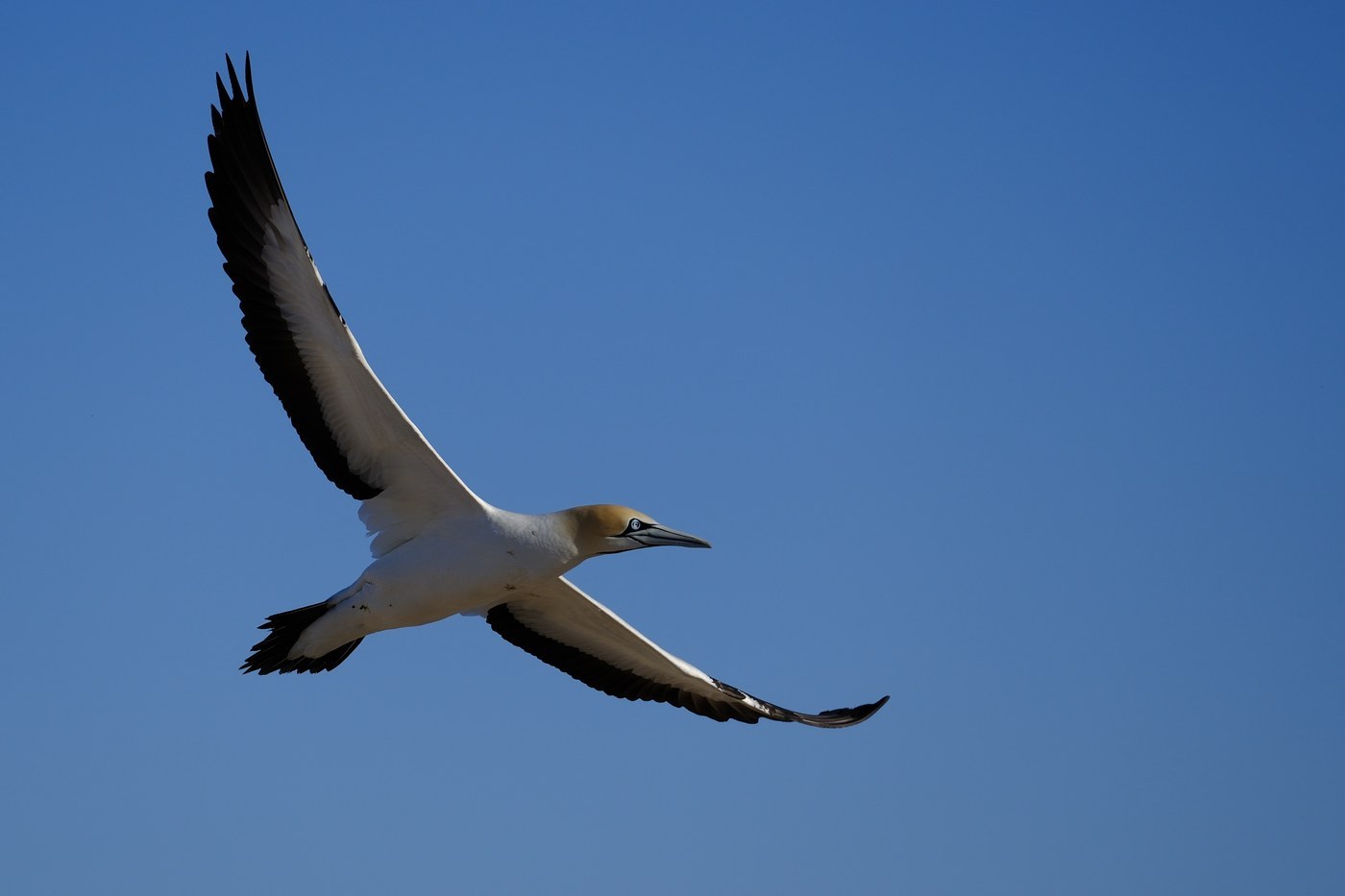
What Cape Gannet Feathers Look Like
Cape Gannets are large, torpedo-shaped seabirds with mostly white body plumage offset by solid black flight feathers — both primaries and secondaries are black to the base, a detail worth checking closely since it differs from some relatives. Body feathers are dense, stiff, and white, built to shed water, while head and nape feathers carry a soft golden-buff wash, most noticeable on fresh feathers. One of the most diagnostic details is the tail: Cape Gannet tail feathers are entirely black, not white with a dark tip as in some related gannets. A fine black line of feathering also runs along the gular (throat) area, visible as a thin dark stripe on close inspection.
Step-by-Step: Is This Feather From a Cape Gannet?
- Check the primaries' base. Solid black from tip to base (not just a dark tip) fits Cape Gannet.
- Inspect the tail feathers. All-black tail feathers, rather than white with a dark central pair, are a strong diagnostic for this species over close relatives.
- Look for a golden wash. Fresh head and nape feathers often show a soft buff-yellow tint that fades with wear.
- Confirm body texture. White body feathers should feel notably dense and stiff, adapted for a plunge-diving lifestyle.
- Check for a throat stripe. A thin black line of feathering at the throat supports gannet identification generally.
- Consider the coastline. Feathers found on beaches of southern Africa, especially near offshore islands, fit this species' range well.
Similar Species & How to Tell Them Apart
Australasian Gannet is extremely similar but shows a white tail with only the central feathers black, unlike the Cape Gannet's entirely black tail — this is the most reliable single distinguishing feature between the two. Northern Gannet, found in the North Atlantic rather than off Africa, also shows a mostly white tail with a dark tip rather than an all-black tail, and its range makes confusion unlikely outside of unusual vagrancy. The all-black tail combined with solid black primaries from tip to base is the cleanest way to confirm Cape Gannet specifically.
Where & When You'll Find Them
Cape Gannets breed on a small number of islands off the Benguela and Agulhas coasts of southern Africa (Namibia and South Africa), foraging widely over adjacent cold, productive waters. Feathers commonly wash up on beaches near breeding colonies and along the broader foraging range at any time of year, but the greatest numbers typically appear after the post-breeding molt in the austral autumn and winter, when adults replace worn flight feathers following the nesting season.
Frequently asked questions
What's the key tail difference for Cape Gannet?
Cape Gannet tail feathers are entirely black, while the very similar Australasian Gannet shows a white tail with only the central feathers black.
Are Cape Gannet primaries black at the base?
Yes, both primaries and secondaries are solid black from tip to base, not just dark-tipped.
Why do some Cape Gannet feathers look golden on the head?
Fresh head and nape feathers carry a soft golden-buff wash that fades with wear over time.
Where would I find Cape Gannet feathers?
On beaches near breeding islands and along the broader foraging range off the Benguela and Agulhas coasts of southern Africa.
When is molt most likely to leave feathers behind?
Primarily in the austral autumn and winter, following the breeding season.