
How to Identify Brambling Feathers
Spot the orange shoulder patch, white rump, and mottled black-and-buff back feathers that identify a Brambling among Eurasian finches.
Read the full Brambling encyclopedia entry →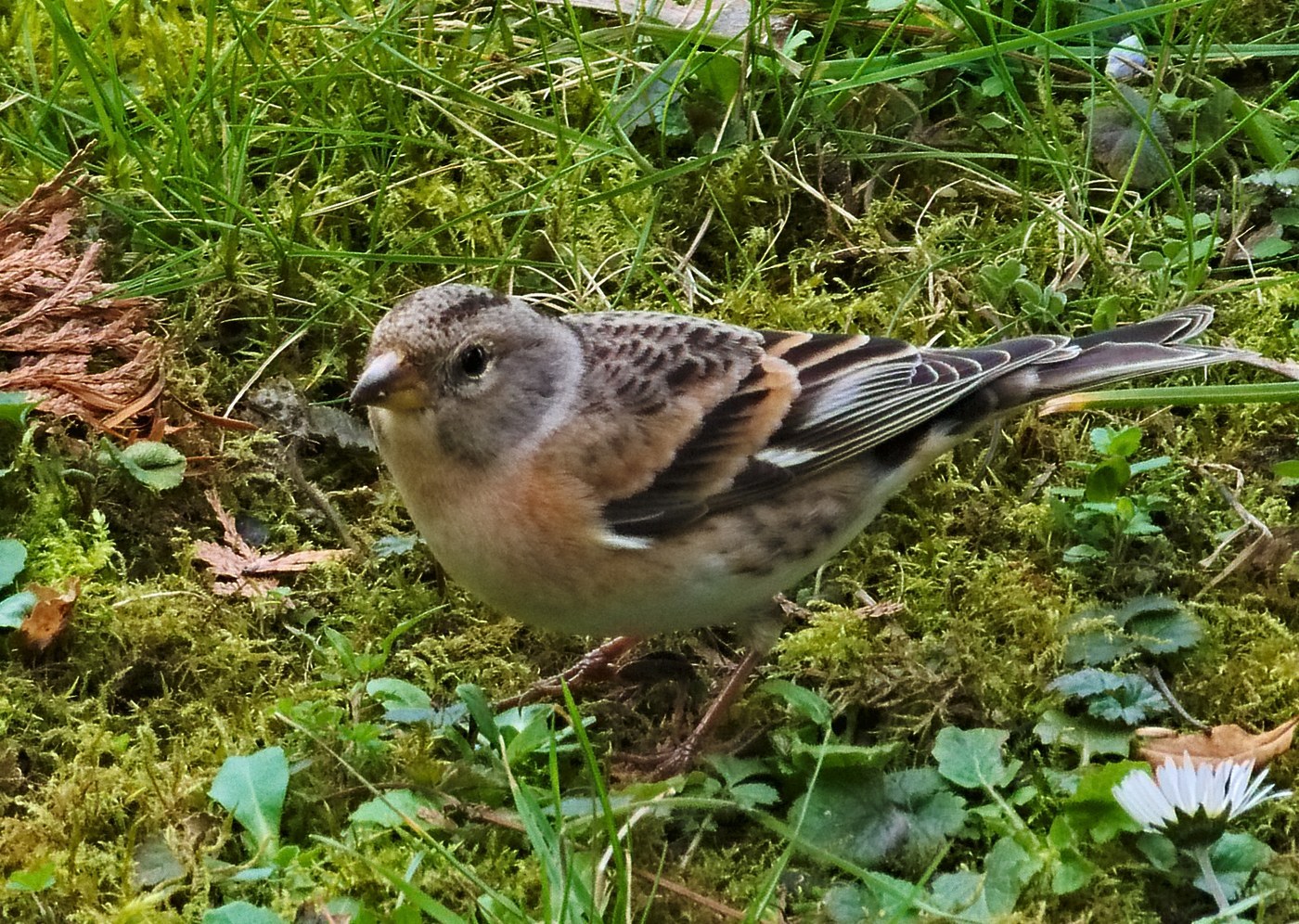
What Brambling Feathers Look Like
The Brambling is a strikingly patterned Eurasian finch, closely related to the Chaffinch, and several of its feathers show bold, distinctive colors and patterns useful for identification even from a single found feather.
- Body/contour feathers (breeding male): glossy black on the head and back in summer, transitioning to a mottled black-and-brown "scaly" pattern in fresh non-breeding plumage (the black feather bases show through pale brown tips after molt, then wear away to reveal solid black by spring) — this scaled look is a useful non-breeding clue.
- Breast/shoulder feathers: warm orange to burnt-orange wash across the breast and shoulder (lesser covert) area, a bright and distinctive color found in both sexes to varying degrees, brighter and more extensive in males.
- Rump feathers: bright white, sharply set off against the black back and dark wings — this white rump patch is one of the most reliable Brambling field marks and shows clearly on individual feathers from that area.
- Flight feathers (primaries/secondaries): blackish with buffy-orange wing bars formed by pale tips on the covert feathers, plus white edging on the tertials — bold, contrasty wing pattern compared to many finches.
- Belly feathers: white to pale buff, unmarked, providing contrast against the orange breast.
- Female/juvenile feathers: duller and browner versions of the same pattern — orange breast wash and white rump still present but less vivid.
- Shaft color: dark brown to blackish on back and flight feathers, pale on breast/belly feathers.
Step-by-Step: Is This Feather From a Brambling?
- Look for a bright white rump feather. A small, pure white feather from the lower back/rump area, especially alongside darker black or brown feathers, is one of the strongest single clues for Brambling.
- Check for orange on the breast or shoulder. A warm orange wash is distinctive and shared by both sexes, though brighter in males.
- Assess the back pattern. A "scaly" mix of black and buff-brown (rather than solid gray-brown) fits fresh non-breeding Brambling plumage; solid glossy black fits breeding male plumage.
- Examine the wing bars. Bold buffy-orange wing bars combined with white tertial edges support this identification over plainer finches.
- Match to habitat/season. Feathers found in beech woodland (a favored food source) or mixed farmland/woodland edge across Eurasia, especially in winter flocks, fit this species' habits.
Similar Species & How to Tell Them Apart
- Chaffinch: the closest relative and most similar species; Chaffinch lacks the bright white rump (showing olive-green instead) and has a more uniform pinkish-brown breast rather than Brambling's bold orange patch.
- House Finch/other finches (non-native comparison contexts): lack the white rump and black-and-orange combination entirely, showing red or streaky patterns instead.
- Hawfinch: much larger and bulkier feathers overall, with a massive bill (if attached) and lacking the white rump patch.
- Female Chaffinch vs. female Brambling: both are duller, but female Brambling retains a hint of the white rump and orange wash that female Chaffinch lacks.
Where & When You'll Find Them
Bramblings breed in birch and conifer forests across northern Eurasia (Scandinavia through Siberia) and migrate south in winter to temperate Europe and Asia, often forming large flocks in beech woodland where they feed on beechmast. Feathers in breeding black-and-orange plumage are most likely found on northern breeding grounds in late spring and summer, while the mottled non-breeding type is far more commonly encountered across Europe and Asia during fall through early spring, particularly beneath beech trees or in farmland stubble fields where wintering flocks congregate.
Frequently asked questions
What's the single best clue for identifying a Brambling feather?
A bright white rump feather is one of the most reliable marks, sharply contrasting with the darker back and wings.
How do I tell this apart from a Chaffinch feather?
Chaffinch lacks the white rump (showing olive-green instead) and has a more uniform pinkish breast rather than Brambling's bold orange patch.
Why do some Brambling feathers look scaly rather than solid black?
Fresh non-breeding feathers have pale brown tips over black bases, creating a scaled look; these tips wear away by spring to reveal solid black breeding plumage.
When and where are Brambling feathers most commonly found?
Fall through early spring in beech woodland or farmland across Europe and Asia, where large wintering flocks feed on beechmast.