
How to Identify Botteri's Sparrow Feathers
Learn the plain, unstreaked warm brown tones and subtly patterned back feathers that distinguish Botteri's Sparrow from the many other grassland sparrows it shares habitat with.
Read the full Botteri's Sparrow encyclopedia entry →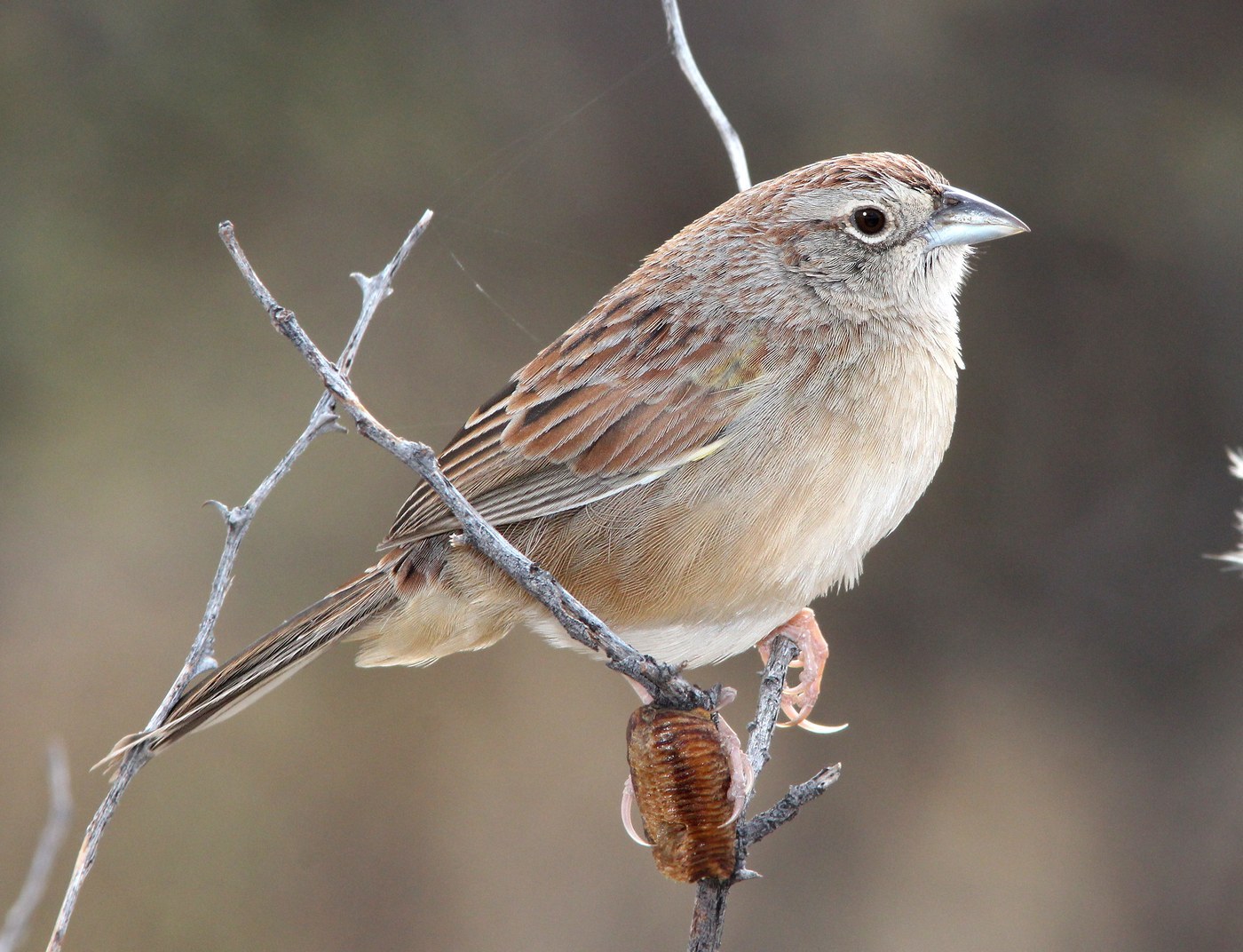
What Botteri's Sparrow Feathers Look Like
Botteri's Sparrow is a notoriously plain-looking grassland sparrow of the southwestern US and Mexico, and this very plainness is itself a useful diagnostic — it lacks most of the bold marks that make many sparrows easy to identify.
- Body/contour feathers: warm grayish-brown to sandy-brown overall, with relatively subtle, fine dark streaking on the back — notably less crisp and bold than many sparrow relatives.
- Crown feathers: brown with fine dark streaking, lacking a strong central pale stripe or bold face pattern — a plain, unadorned crown compared to sparrows with obvious head markings.
- Breast/underpart feathers: plain buffy-gray to whitish, essentially unstreaked — one of the most useful diagnostics, since many similar sparrows show at least light breast streaking.
- Flight feathers: brown with warm buffy edging, 4-5 cm, unremarkable pattern without bold wing bars.
- Tail feathers: relatively long and rounded for a sparrow, brown with subtle darker centers, often looking a bit "loose" or ragged at the tip — Botteri's Sparrow has a notably longer, more rounded tail than many grassland sparrows.
- Shaft color: pale brown, unremarkable.
Step-by-Step: Is This Feather From a Botteri's Sparrow?
- Check for a lack of bold markings. If body feathers are warm brown but notably unstreaked or only faintly marked, especially on the underparts, this fits Botteri's Sparrow's characteristically plain look.
- Assess tail length and shape. A relatively long, rounded tail feather (rather than short and notched) supports this species over shorter-tailed grassland sparrows.
- Look at the crown. A plain brown crown without a bold pale central stripe helps separate this from sparrows with more patterned heads.
- Compare overall warmth. A sandy or warm grayish-brown tone (rather than cold gray or rich rufous) fits the species' typical coloring.
- Match to grassland habitat. Feathers found in tall desert grassland with scattered shrubs in the southwestern US or Mexico support this identification, since the species is a habitat specialist.
Similar Species & How to Tell Them Apart
- Cassin's Sparrow: very similar plain grassland sparrow that overlaps in range; Cassin's tends to look slightly grayer and colder-toned overall versus Botteri's warmer, sandier brown, though the two are notoriously difficult to separate by feather alone — habitat (Botteri's favors slightly denser, taller grass with scattered shrubs) can help.
- Rufous-crowned Sparrow: shows a distinct rufous cap and a bold whisker mark that Botteri's lacks entirely.
- Grasshopper Sparrow: smaller overall with a shorter, more pointed tail and a flatter head profile, plus a buffier, more patterned breast than Botteri's plain underparts.
- Vesper Sparrow: shows white outer tail feathers, a mark completely absent in Botteri's Sparrow, making this an easy way to rule that species out.
Where & When You'll Find Them
Botteri's Sparrows breed in tall desert and coastal grasslands with scattered shrubs across the southwestern US (notably Arizona and Texas) and much of Mexico, with northern populations migrating short distances south for winter. Feathers are most likely found during the breeding season (late spring through summer), when males sing conspicuously from grass stems, making territories easier to locate even though the birds themselves stay hidden low in the grass. Look in tall native grassland with mesquite or other scattered shrubs, particularly after the post-breeding molt in late summer.
Frequently asked questions
Why is 'plainness' actually useful for identifying this species?
Botteri's Sparrow lacks most bold sparrow markings — the underparts are essentially unstreaked and the crown has no strong stripe — so a warm brown, notably unmarked sparrow feather is itself a clue pointing toward this species or its close relative Cassin's Sparrow.
How do I tell Botteri's Sparrow from Cassin's Sparrow by feather?
They're very similar; Botteri's tends to run warmer and sandier brown versus Cassin's grayer, colder tone, but the difference is subtle and habitat (denser grass with shrubs for Botteri's) often helps more than color alone.
What tail feature helps rule out Vesper Sparrow?
Vesper Sparrow shows white outer tail feathers, which Botteri's Sparrow completely lacks.
When is the best time to find these feathers?
Late spring through summer during the breeding season, and again after the late-summer post-breeding molt.