
How to Identify Boreal Chickadee Feathers
Separate the warm brown cap, gray-brown back, and rusty flanks of the Boreal Chickadee from the more familiar black-capped chickadees found further south.
Read the full Boreal Chickadee encyclopedia entry →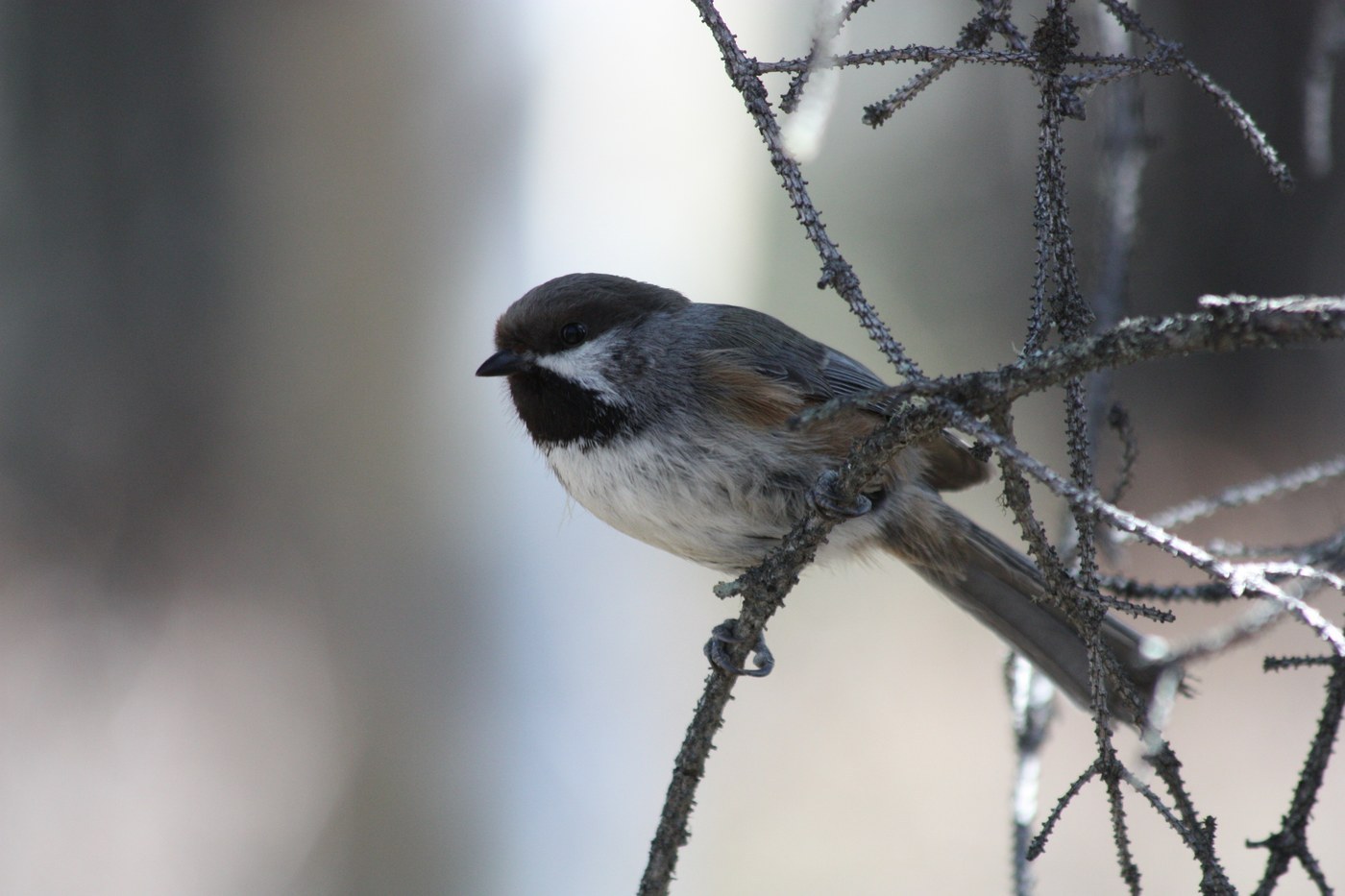
What Boreal Chickadee Feathers Look Like
The Boreal Chickadee is a small northern songbird closely related to the familiar Black-capped Chickadee, but with a notably warmer, browner palette suited to its dense spruce-fir forest home.
- Cap feathers: brown (not black) on the crown, a key distinguishing feature from most other chickadees — soft, small feathers 1-1.5 cm.
- Back/body feathers: gray-brown to olive-brown on the back, with a duller, less crisp appearance than Black-capped Chickadee's cleaner gray.
- Cheek feathers: pale grayish-white patch, providing contrast against the brown cap and dark throat.
- Throat feathers: black, small and neat, similar in shape to other chickadees but slightly less glossy.
- Flank feathers: rich rusty-brown to chestnut, a standout diagnostic feature — Boreal Chickadee flanks are notably warmer and more saturated than any look-alike species.
- Flight feathers: dull gray-brown, 4-5 cm, without bold white edging (unlike Black-capped Chickadee, which often shows crisper pale fringes on the wing feathers).
- Tail feathers: gray-brown, short (5-6 cm), unremarkable pattern.
- Shaft color: brown to grayish-brown, matching the muted overall tone.
Step-by-Step: Is This Feather From a Boreal Chickadee?
- Check the cap color. A brown (not black) crown feather is the most important first clue, immediately separating this species from Black-capped and Carolina Chickadees.
- Look for rusty flanks. Small flank feathers with a rich chestnut or rust wash strongly support Boreal Chickadee, a much warmer tone than related species show.
- Assess overall crispness. Boreal Chickadee feathers tend to look duller and softer-edged compared to the crisper gray-and-white of Black-capped Chickadee.
- Measure size. All feathers should be tiny, consistent with a small chickadee (body feathers around 1-1.5 cm, flight feathers 4-5 cm).
- Match to habitat. Feathers found in dense boreal spruce-fir or mixed coniferous forest, especially in Canada, Alaska, or the northernmost US states, fit this species' specialized habitat needs.
Similar Species & How to Tell Them Apart
- Black-capped Chickadee: has a solid black (not brown) cap and cleaner gray back and flanks without the rusty wash; ranges overlap at the southern edge of Boreal Chickadee's range, so cap color is the deciding factor.
- Carolina Chickadee: also black-capped, smaller overall, and found well south of Boreal Chickadee's range, with grayer, plainer flanks.
- Chestnut-backed Chickadee: shares a warm rusty-brown tone but goes further, with a rich chestnut-brown back (not just flanks) and is restricted to the Pacific Northwest, a very different range from Boreal Chickadee.
- Mountain Chickadee: has a distinct white eyebrow stripe that Boreal Chickadee lacks entirely.
Where & When You'll Find Them
Boreal Chickadees are non-migratory residents of dense spruce-fir and mixed coniferous forests across Canada, Alaska, and the northernmost fringes of the continental US. Because they don't migrate, feathers can be found year-round near conifer stands, with the main molt period occurring in late summer after breeding. Look on the ground beneath dense conifers or near cavity nest sites in decayed stumps, where this species — like other chickadees — often excavates its own nest hole.
Frequently asked questions
What's the fastest way to tell this apart from a Black-capped Chickadee feather?
Check the cap color: Boreal Chickadee has a brown crown, while Black-capped Chickadee's is solid black.
Why are the flank feathers useful for identification?
Boreal Chickadee flanks show a rich rusty-chestnut wash that's notably warmer than the grayer flanks of most other chickadees.
Could this be a Chestnut-backed Chickadee instead?
Chestnut-backed Chickadee has a rich chestnut back (not just flanks) and lives only in the Pacific Northwest, a different range from Boreal Chickadee's boreal forest belt.
When is molt season for this species?
Late summer, after the breeding season, is when most body feather turnover and feather drop occurs.