
How to Identify Blue-headed Vireo Feathers
A guide to the blue-gray head, bold white spectacles, and olive-green back feathers of this North American vireo, distinguished from other vireo species.
Read the full Blue-headed Vireo encyclopedia entry →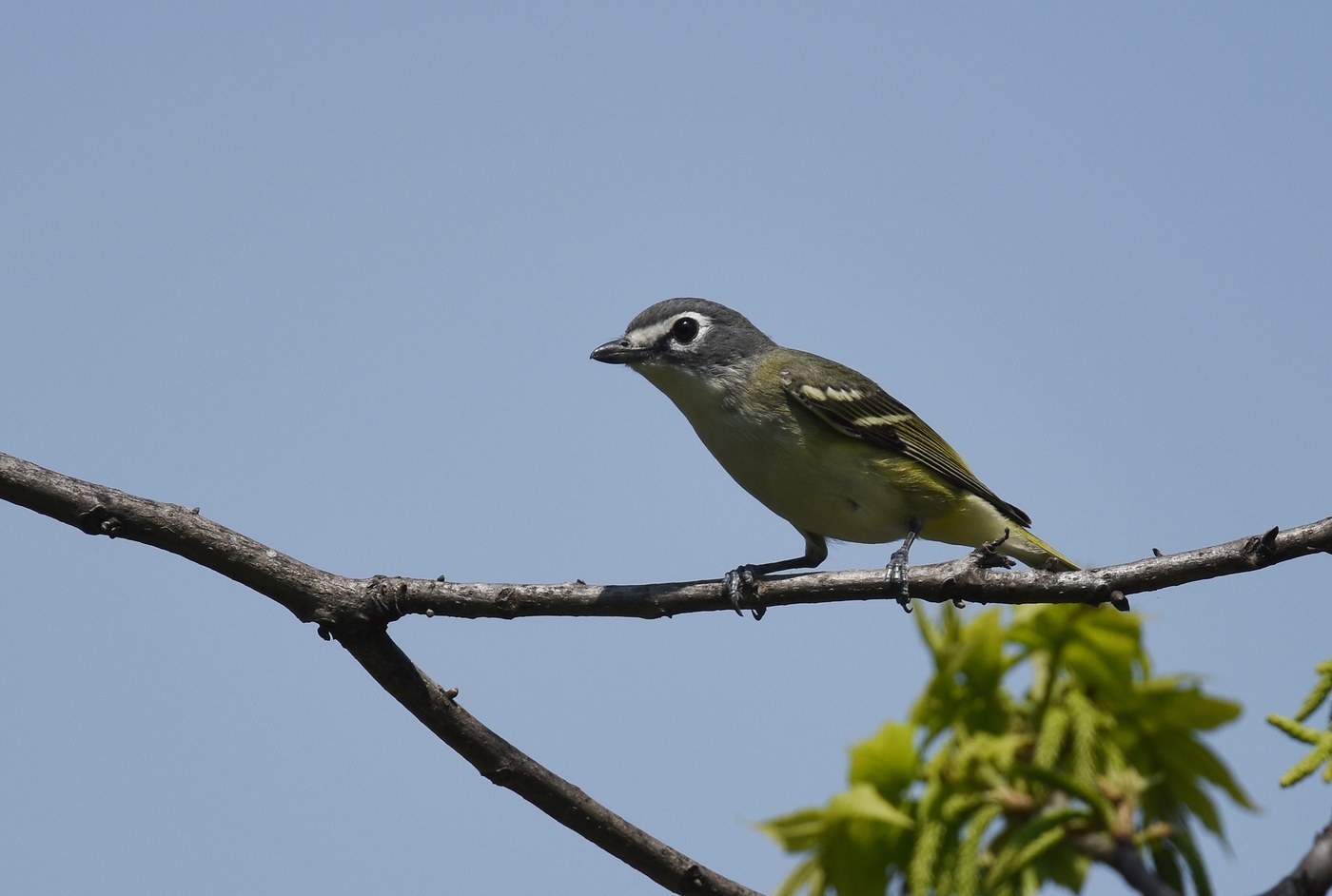
What Blue-headed Vireo's Feathers Look Like
Blue-headed Vireo is a small, compact songbird with a subtly patterned but distinctive plumage. The head is blue-gray, notably darker and cooler-toned than the rest of the body, sharply set off from the back — this is the source of the species' name and the first thing to check. The most diagnostic single feature, though, is the bold white "spectacles": a white eye-ring connected to a white line from the eye to the bill (lores), forming a complete pale ring around the eye that stands out clearly even on individual face feathers. The back and rump are olive-green, while the underparts are white with pale yellowish flanks and sides. Wing feathers show two crisp white wing bars across the coverts, and the flight feathers are edged in yellowish-green. Feathers are small and soft, typical of a vireo — body feathers around 2 cm, reflecting the bird's compact size.
Step-by-Step: Is This Feather From a Blue-headed Vireo?
- Check head color separately from the back — blue-gray head against an olive-green back, with a clean boundary, is the key structural clue.
- Look for white spectacle feathers: an eye-ring or lore-line feather that's crisp white, forming part of a "goggled" pattern.
- Confirm two white wing bars on covert feathers, clean and well-defined rather than faint or buffy.
- Note yellowish flank feathers contrasting with an otherwise white belly.
- Measure size: small, soft vireo-type feather, a few centimeters, ruling out larger warblers or tanagers.
Similar Species & How to Tell Them Apart
Cassin's Vireo and Plumbeous Vireo (its close western relatives, once considered the same species) are very similar; Plumbeous Vireo is grayer overall with little to no yellow on the flanks or green on the back, while Cassin's Vireo is intermediate, duller than Blue-headed. If a feather shows richer yellow-green tones with a well-defined blue-gray hood, Blue-headed Vireo (the eastern form) is favored. Red-eyed Vireo and Warbling Vireo lack the white spectacles and blue-gray head entirely, showing plainer face patterns with a dark eye-line instead of a full pale eye-ring. The crisp white spectacles combined with a distinctly blue-gray (not uniformly gray or olive) head are the most reliable combination for confirming this species.
Where & When You'll Find Them
Blue-headed Vireo breeds in mixed and coniferous forest across eastern North America and the Appalachian region, wintering in the southeastern United States, Mexico, and Central America — notably, it's one of the hardiest vireos, often the first vireo to arrive in spring and the last to leave in fall. Feathers are most often found on the forest floor beneath favored foraging trees, since this species gleans slowly and methodically in the mid-to-upper canopy. Post-breeding molt occurs on the breeding grounds in later summer, making late summer into early fall the best time to find feathers there, while wintering grounds in the Southeast and further south can yield feathers throughout the colder months as well.
Frequently asked questions
What is the most distinctive single feather feature?
White "spectacle" feathers forming a bold, complete eye-ring and lore-line, standing out against the blue-gray head.
How does the head color compare to the back?
The head is a cooler blue-gray, sharply contrasting with the olive-green back — a clean color boundary is a key clue.
How do I separate this from Plumbeous Vireo?
Plumbeous Vireo is grayer overall with little or no yellow on the flanks or green on the back, while Blue-headed Vireo shows richer yellow-green tones.
What rules out Red-eyed Vireo?
Red-eyed Vireo lacks the white spectacles and blue-gray head, instead showing a plainer face with a dark eye-line and gray cap.
When and where should I look for feathers?
Late summer into early fall on breeding grounds in eastern North American forests, or through the winter months in the southeastern U.S., Mexico, and Central America.