
How to Identify Blue-gray Tanager Feathers
How to identify the soft powder-blue body feathers and brighter blue shoulder patch of this common Central and South American tanager.
Read the full Blue-gray Tanager encyclopedia entry →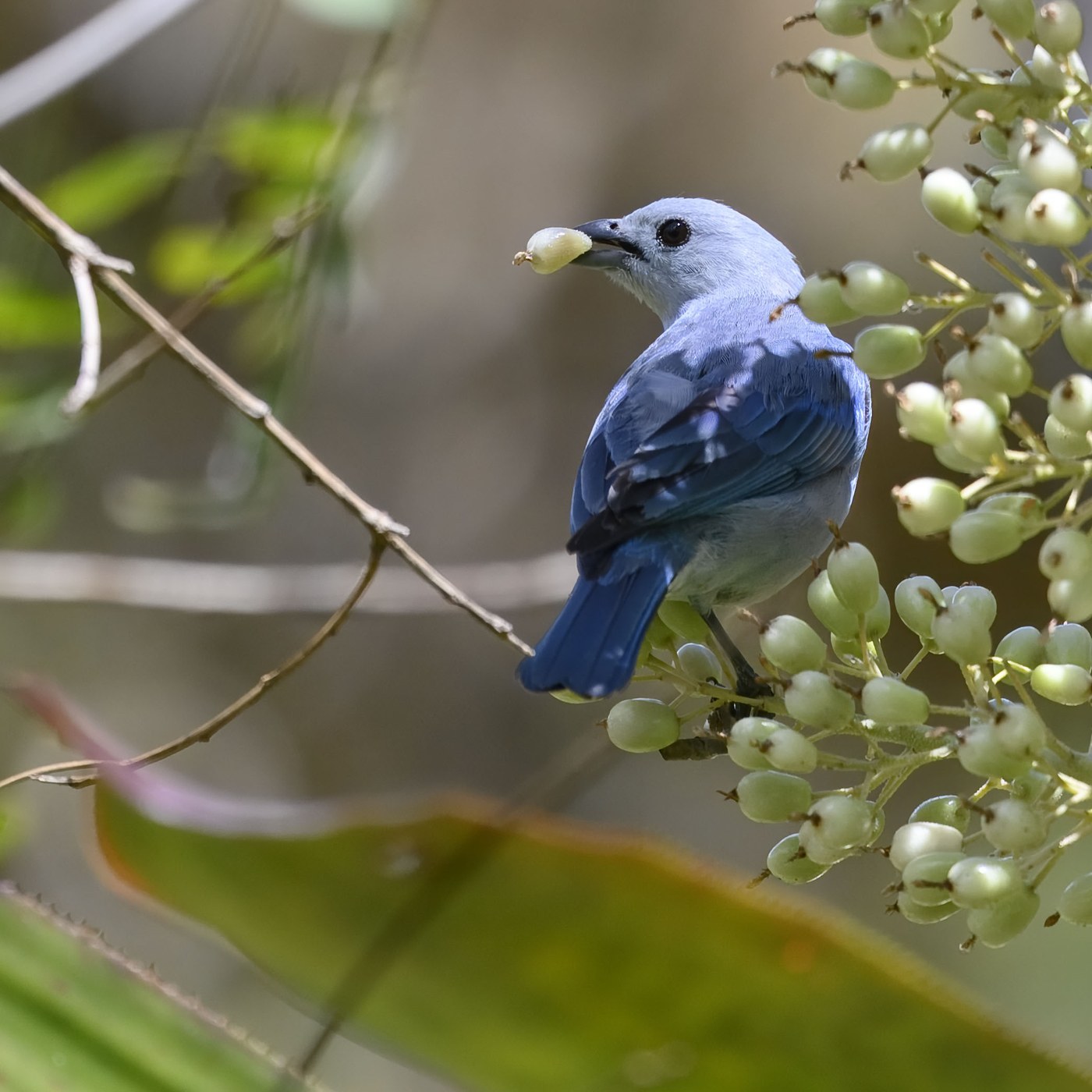
What Blue-gray Tanager's Feathers Look Like
Blue-gray Tanager is a common, medium-small songbird with a subtle but distinctive color scheme. Body feathers overall are a soft, powdery blue-gray, fairly uniform and unmarked, without streaking or barring — the effect is gentle and pastel rather than bold. The standout feature is the lesser wing coverts (shoulder patch), which are a brighter, more saturated blue, almost turquoise, clearly contrasting with the paler gray-blue of the rest of the body when the wing is folded — this two-tone blue effect on the wing is one of the best diagnostic clues on a single feather. Flight feathers (primaries/secondaries) are a darker blue-gray to blackish-blue on the outer edge, with paler gray inner edges. Tail feathers are dark blue-gray, plain and unbarred. Feather size is modest, typical of a tanager: body feathers around 2-3 cm, flight feathers around 6-8 cm.
Step-by-Step: Is This Feather From a Blue-gray Tanager?
- Check for an overall pastel, powdery blue-gray tone rather than a deep, saturated blue.
- Look for a brighter blue "shoulder" feather among a set — if one feather is noticeably more saturated turquoise-blue than the rest, that's the diagnostic covert patch.
- Confirm the absence of streaking, barring, or a bold contrasting cap — this species is subtly plain, not boldly patterned.
- Measure size: small, tanager-sized feathers (a few centimeters) rule out larger blue birds like jays or grosbeaks.
- Consider habitat context — a soft blue-gray songbird feather found in gardens, forest edge, or open woodland in Central/South America fits this common, adaptable species well.
Similar Species & How to Tell Them Apart
Palm Tanager (often found alongside Blue-gray Tanager) is olive-gray to olive-green rather than blue, easily separated by the lack of any blue tone. Blue-necked Tanager and other multicolored tanagers show much bolder, patchier color combinations (black backs, orange or yellow underparts) rather than an overall soft blue-gray body. Blue Grosbeak, sometimes sharing similar habitat, is deep, richly saturated blue with chestnut wing bars — much bolder and warmer than the pastel, cooler tone of Blue-gray Tanager. The pastel overall tone paired with a brighter blue shoulder patch is the most efficient way to confirm this species.
Where & When You'll Find Them
Blue-gray Tanager is one of the most common and widespread tanagers in the Neotropics, found in gardens, forest edges, plantations, and open woodland from Mexico through Central America and into much of South America, often in pairs or small flocks and highly tolerant of human-modified habitats. Feathers are frequently found in gardens, on patios, and around fruiting trees and feeders, since this species readily visits fruit and nectar feeders. Because it breeds across a long season in the tropics and molts gradually, feathers can turn up at almost any time of year, with a modest increase in feather turnover following nesting periods.
Frequently asked questions
What is the overall color of a Blue-gray Tanager feather?
A soft, powdery blue-gray, fairly uniform and unmarked across most of the body.
What is the single best diagnostic feather to find?
A shoulder (lesser covert) feather, which is a brighter, more saturated turquoise-blue than the rest of the body — a clear two-tone clue.
How does this differ from a Palm Tanager feather?
Palm Tanager is olive-gray to olive-green with no blue tone at all, easily separated from the blue-gray of this species.
Why wouldn't this be confused with a Blue Grosbeak feather?
Blue Grosbeak is a much deeper, richer, warmer blue with chestnut wing bars, while Blue-gray Tanager is a cooler, pastel tone without wing bars.
Where are these feathers commonly found?
In gardens, on patios, and around fruiting trees or feeders throughout its wide range from Mexico to South America, at almost any time of year.