
How to Identify Black Swan Feathers
A guide to the curly black feathers and surprising white flight feathers that make this Australian swan unmistakable.
Read the full Black Swan encyclopedia entry →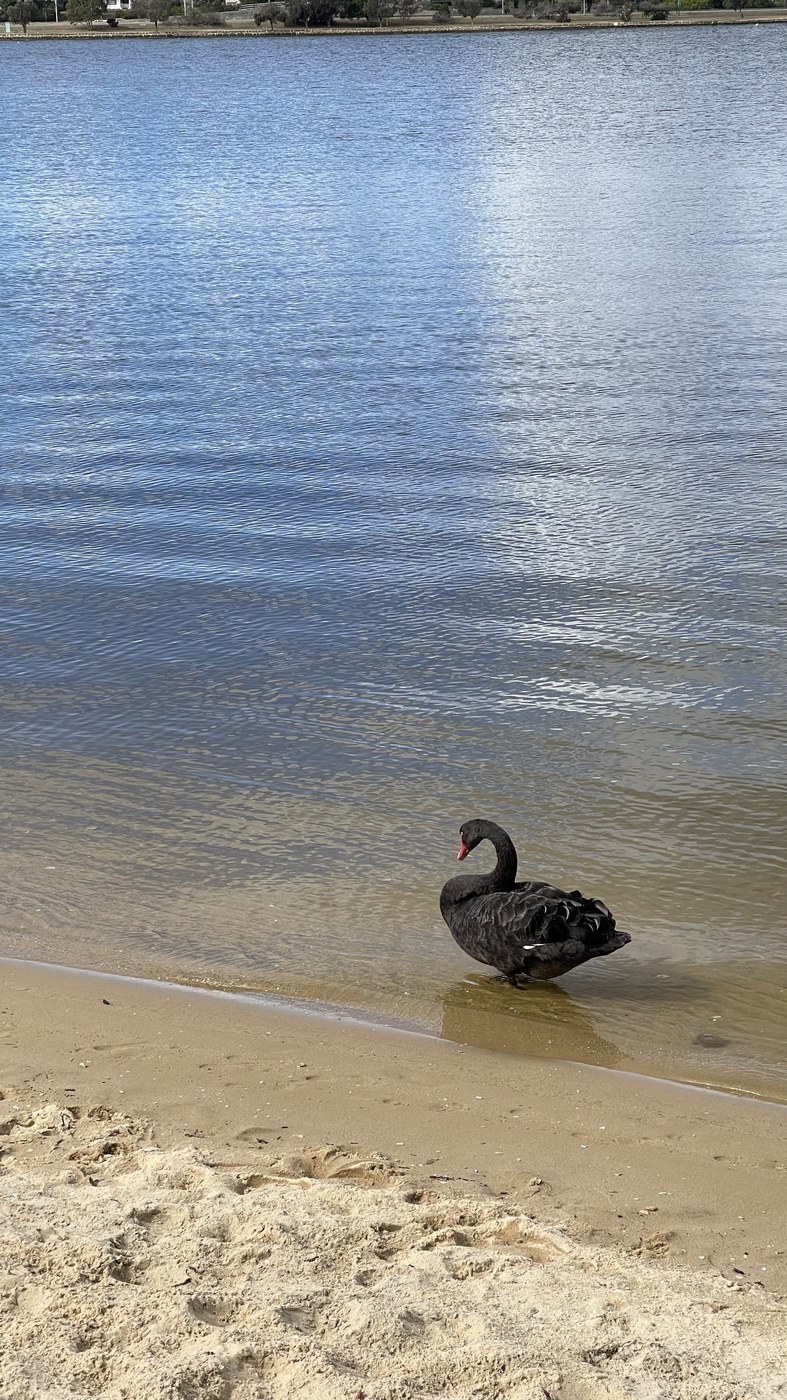
What Black Swan Feathers Look Like
Black Swan plumage is almost entirely sooty black to black-gray, but its most distinctive feature is texture: back and covert feathers have a curled, ruffled edge unlike the flat feathers of any other swan or waterfowl, giving the bird a shaggy, wavy-plumed look. The real surprise comes in flight: the primary and secondary flight feathers are pure white, a striking contrast that's invisible when the wings are folded but obvious the moment the bird takes flight or when an individual flight feather is found on its own. Contour feathers are large and dense given the bird's size, with black feathers 8-12 cm and flight feathers reaching 25-30 cm.
Step-by-Step: Is This Feather From a Black Swan?
- Check for curled edges. A large black contour or back feather with a distinctly wavy, curled, or ruffled edge (rather than a flat, smooth vane) is essentially unique to this species among waterfowl.
- Look for a paired white flight feather. A large white primary or secondary feather found alongside black body feathers of similar large scale is a strong, unusual combination diagnostic for Black Swan.
- Measure it. Large feather size (contour 8-12 cm, flight feathers up to 25-30 cm) fits a swan rather than a duck or goose.
- Rule out scoters. Black Scoter feathers are all dark including the flight feathers, with no white — so a white flight feather paired with black body feathers rules out an all-dark diving duck.
- Rule out white swans. If most of the bird's feathers would be white with only dark facial skin, that points to a Mute, Trumpeter, or Tundra Swan instead, the opposite pattern from Black Swan.
Similar Species & How to Tell Them Apart
Scoters (such as Black Scoter) are entirely dark including their flight feathers, with no white primaries at all, and their feathers are much smaller than a swan's. Canada Goose is dark brown-black on the body but has a bold white cheek patch and lacks the curly feather texture and white flight feathers of Black Swan. True white swans (Mute, Trumpeter, Tundra) are essentially the photo negative of Black Swan — white body with only dark facial skin — so the black-body-with-white-flight-feathers combination is unique to this species.
Where & When You'll Find Them
Black Swans are native to Australia's wetlands, lakes, and estuaries and have also been introduced to New Zealand, parts of Europe, and the United States, where feral populations persist. They undergo a flightless wing molt in late summer of the Southern Hemisphere (roughly November through February), when large numbers gather at lake margins, making that period and location the most productive for finding feathers.
Frequently asked questions
Why does this black feather have curled or wavy edges?
Black Swans have uniquely curled, ruffled back and covert feathers, a texture not found in any other swan or waterfowl species.
I found a white feather with black feathers nearby — is that normal?
Yes — Black Swans have an all-black body but pure white flight feathers, an unusual and diagnostic combination invisible until the wings open or a flight feather is shed.
How is this different from a Black Scoter feather?
Black Scoter is entirely dark including its flight feathers, with no white anywhere, unlike Black Swan's white primaries and secondaries.
Could this be from a Canada Goose?
Canada Goose lacks the curly feather texture and white flight feathers, and shows a bold white cheek patch instead.
When do most feathers turn up?
During the flightless wing molt in late summer of the Southern Hemisphere, roughly November through February, near lake margins where swans gather in flocks.
Black Swan identified by the community
Recent Black Swan feathers identified with Feather Identifier.
