
How to Identify Bearded Vulture Feathers
A guide to identifying Bearded Vulture feathers by their long, wedge-shaped tail and rust-stained underparts caused by deliberate mud-bathing behavior.
Read the full Bearded Vulture encyclopedia entry →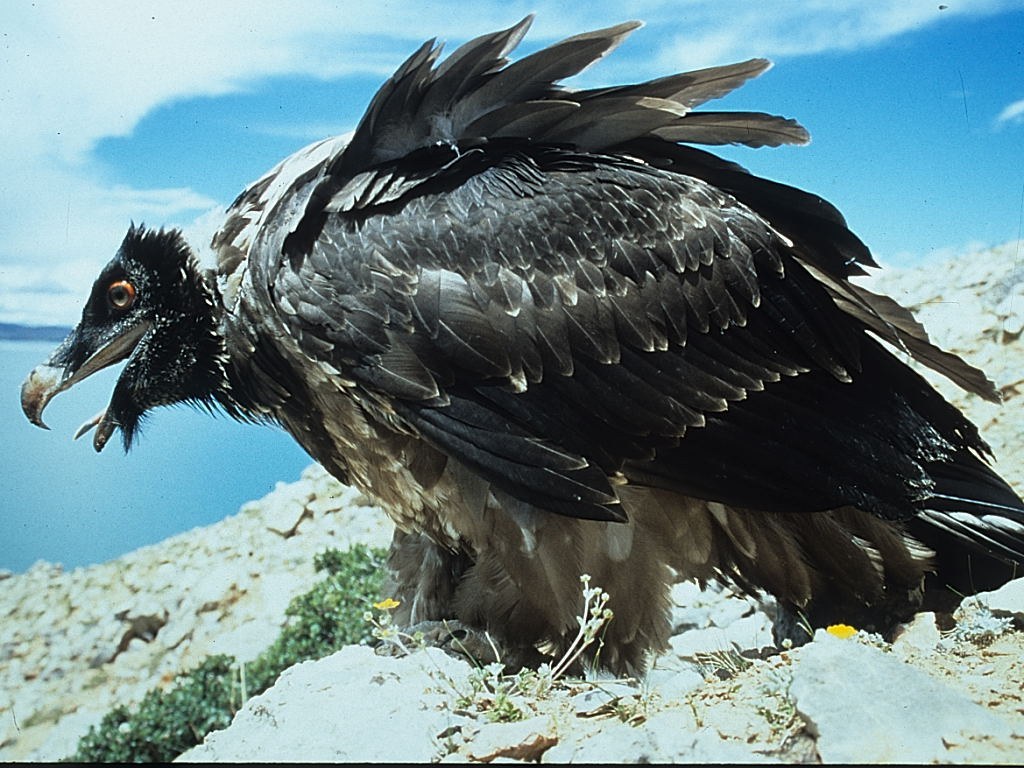
What Bearded Vulture's Feathers Look Like
The Bearded Vulture, or Lammergeier, is a huge raptor with one of the most unusual color palettes among vultures. Head, neck, and underparts feathers are typically a rusty-orange to deep apricot color in adults - but this is not the bird's natural pigment; it comes from repeatedly rubbing feathers in iron-rich mud and dust, so the intensity varies between individuals and even between feathers on the same bird, and a freshly grown feather may show a paler, creamier base color before staining darkens it. Back and wing feathers are dark grey to blackish, contrasting with the rusty body tone. The tail is notably long and wedge-shaped (diamond-shaped in flight), unusual among vultures, with dark grey-brown feathers. A tuft of black bristly feathers under the bill forms the "beard" that gives the species its name - these bristle-like facial feathers are stiff and distinct from normal contour feathers.
Step-by-Step: Is This Feather From a Bearded Vulture?
- Check for rusty-orange staining - a warm, sometimes uneven orange tint on an otherwise pale feather base, especially on body feathers.
- Assess overall size - this is a very large bird (wingspan up to 2.8 m), so feathers, especially flight and tail feathers, will be exceptionally large and heavy.
- Look at tail feather shape - long, contributing to the diamond/wedge tail shape, longer than in most other vultures.
- Note back/wing color - dark grey to blackish, contrasting with any rusty underparts feathers found nearby.
- Look for stiff facial bristles - small black bristle-like feathers, distinct in texture from soft body down, if you've found facial feathers.
- Factor in habitat/elevation - high mountain terrain (Alps, Himalayas, East African highlands, etc.) fits this species far better than lowland habitats.
Similar Species & How to Tell Them Apart
Other large Old World vultures like Griffon Vulture show plain pale buff-to-brown body feathers without any rusty staining and a much shorter, more rounded tail rather than the Bearded Vulture's long wedge shape. Egyptian Vulture is much smaller with white body feathers and black flight feathers, an entirely different combination. No other vulture combines the long diamond-shaped tail with rust-stained underparts, making these two traits together highly diagnostic once confirmed.
Where & When You'll Find Them
Bearded Vultures live in remote mountainous terrain - the Alps, Pyrenees, Himalayas, and parts of the Caucasus and East African highlands - often at very high elevations near cliffs and gorges, feeding largely on bone marrow from carcasses. They are largely resident with local movements tied to terrain and food. Molt is slow and protracted given the species' large size and long feather-growth time, proceeding across the year without one sharp peak, so feathers can be found near cliff roosts and nest ledges at various times, though breeding-season activity around nest cliffs (varies by region, often winter-spring in parts of the range) may concentrate finds somewhat.
Frequently asked questions
Why do Bearded Vulture feathers show rusty orange coloring?
It's cosmetic staining from the bird deliberately rubbing its feathers in iron-oxide-rich mud and dust, not a natural pigment, so the shade can vary between individuals and feather age.
How does the tail shape help identification?
Bearded Vulture has an unusually long, wedge/diamond-shaped tail compared to the short, rounded tails of most other vultures, so a long tail feather is a strong clue.
Could a rusty-colored feather be from another vulture species?
It's unlikely - the deliberate mud-staining behavior that produces this coloring is distinctive to Bearded Vulture among vultures.
What is the beard made of?
A tuft of stiff, bristle-like black feathers beneath the bill, different in texture from the bird's soft body contour feathers.
Where geographically should I expect to find these feathers?
High mountain terrain such as the Alps, Himalayas, or East African highlands - this is not a lowland species.
Bearded Vulture identified by the community
Recent Bearded Vulture feathers identified with Feather Identifier.
