
How to Identify Bare-eyed Cockatoo Feathers
How to identify Bare-eyed Cockatoo (Little Corella) feathers by the faint salmon-pink wash on white plumage and the short, rounded crest, distinguishing it from Sulphur-crested Cockatoo.
Read the full Bare-eyed Cockatoo encyclopedia entry →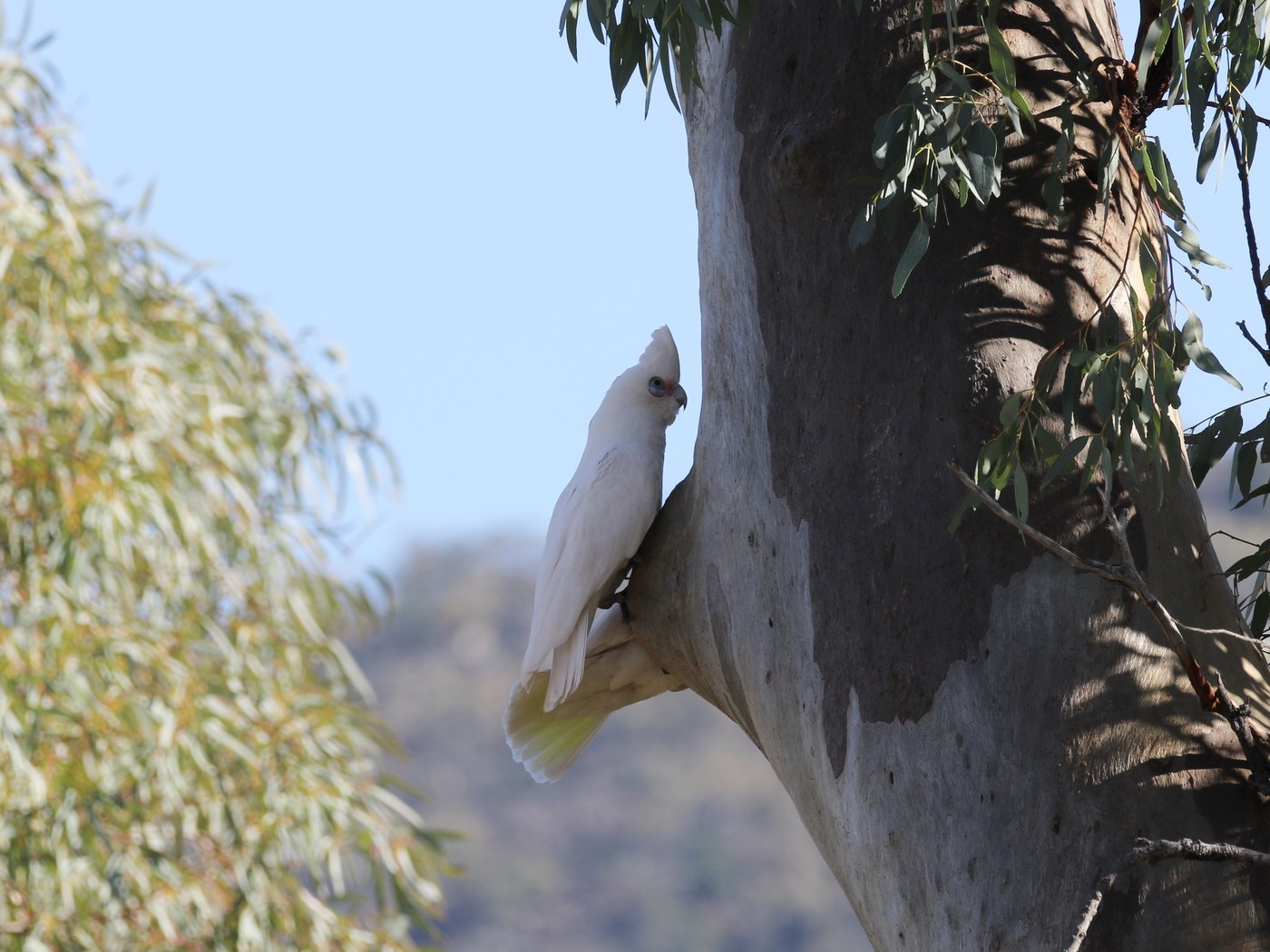
What Bare-eyed Cockatoo Feathers Look Like
The Bare-eyed Cockatoo, also widely known as the Little Corella, is an Australian cockatoo whose feathers are subtler than its showier relatives but still carry a few useful diagnostic touches. Body feathers are essentially pure white throughout, with a faint salmon-pink to pale orange wash visible mainly on the underwing and around the base of the bill/lores area - useful if you find a small facial or under-covert feather with a hint of pink rather than pure white. The crest is short and rounded rather than tall, made up of stubby white feathers that lie mostly flat and are far less conspicuous than the tall yellow crest of a Sulphur-crested Cockatoo. Flight feathers are white with pale yellow tinting on the underside, and the tail feathers are broad, white, and rounded at the tip, again with a faint yellow wash visible on the underside in good light.
Step-by-Step: Is This Feather From a Bare-eyed Cockatoo?
- Check for a salmon-pink wash. A white feather with a faint pink or salmon tint, especially from the underwing or face area, is a useful positive clue for this species.
- Look at crest feather shape. Short, rounded, stubby crest feathers rather than long, tall, backswept ones support Bare-eyed/Little Corella over Sulphur-crested Cockatoo.
- Examine underside tinting. A pale yellow wash on the underside of a white flight or tail feather is consistent with this species and many white cockatoos generally.
- Measure the feather. Flight feathers in the 15-20 cm range fit a medium-large cockatoo, smaller than the largest black cockatoos but larger than a small parrot.
- Weigh the range and habitat. A matching feather found in open woodland, farmland, or near watercourses across inland and northern Australia supports this identification.
Similar Species & How to Tell Them Apart
- Sulphur-crested Cockatoo: Shows a tall, prominent yellow crest and a stronger yellow wash under the wings and tail, versus the Bare-eyed Cockatoo's short crest and subtler salmon-pink tint.
- Long-billed Corella: Very similar white plumage, but shows more extensive pink-red coloring on the face and breast, not just a faint wash.
- Galah: Shows bold pink body feathers contrasted with pale grey wings, entirely different from the largely white Bare-eyed Cockatoo.
- Corella hybrids/other corella species: Can be genuinely difficult to separate on feather alone; range and the specific extent of facial pink coloring are the most useful supporting clues.
Where & When You'll Find Them
Bare-eyed Cockatoos (Little Corellas) are widespread across inland and northern Australia, favoring open woodland, farmland, and areas near rivers and waterholes, often gathering in large, noisy flocks. Feathers are commonly found beneath communal roost trees, which can host very large numbers of birds, as well as around feeding areas in grain crops and grasslands. Breeding timing varies regionally with rainfall and food availability, but post-breeding molt generally produces the greatest number of fresh feathers around roost sites in the months following local breeding activity.
Frequently asked questions
How can I tell this from a Sulphur-crested Cockatoo feather?
Look at crest feather shape and yellow tinting - Sulphur-crested Cockatoo has long, tall crest feathers and a stronger yellow wash, while Bare-eyed Cockatoo's crest feathers are short and rounded with only a faint salmon-pink tint elsewhere.
What does the pink wash look like and where is it found?
A faint salmon-pink to pale orange tint appears mainly on underwing feathers and around the face/lores, rather than across the whole body.
How big are Bare-eyed Cockatoo feathers?
Flight feathers run about 15-20 cm, fitting a medium-large cockatoo, smaller than the largest black cockatoos but larger than a small parrot.
Could this be a Long-billed Corella feather instead?
Long-billed Corella shows more extensive pink-red coloring on the face and breast rather than just a faint wash, which helps separate the two similar species.
Where and when are feathers most commonly found?
Beneath large communal roost trees and around grain farmland in inland and northern Australia, with post-breeding molt producing the most fresh feathers regionally.