
How to Identify Australian Raven Feathers
How to confirm a solid black feather came from an Australian Raven rather than a crow, using size, throat-hackle shape, gloss, and the pale feather-base trick.
Read the full Australian Raven encyclopedia entry →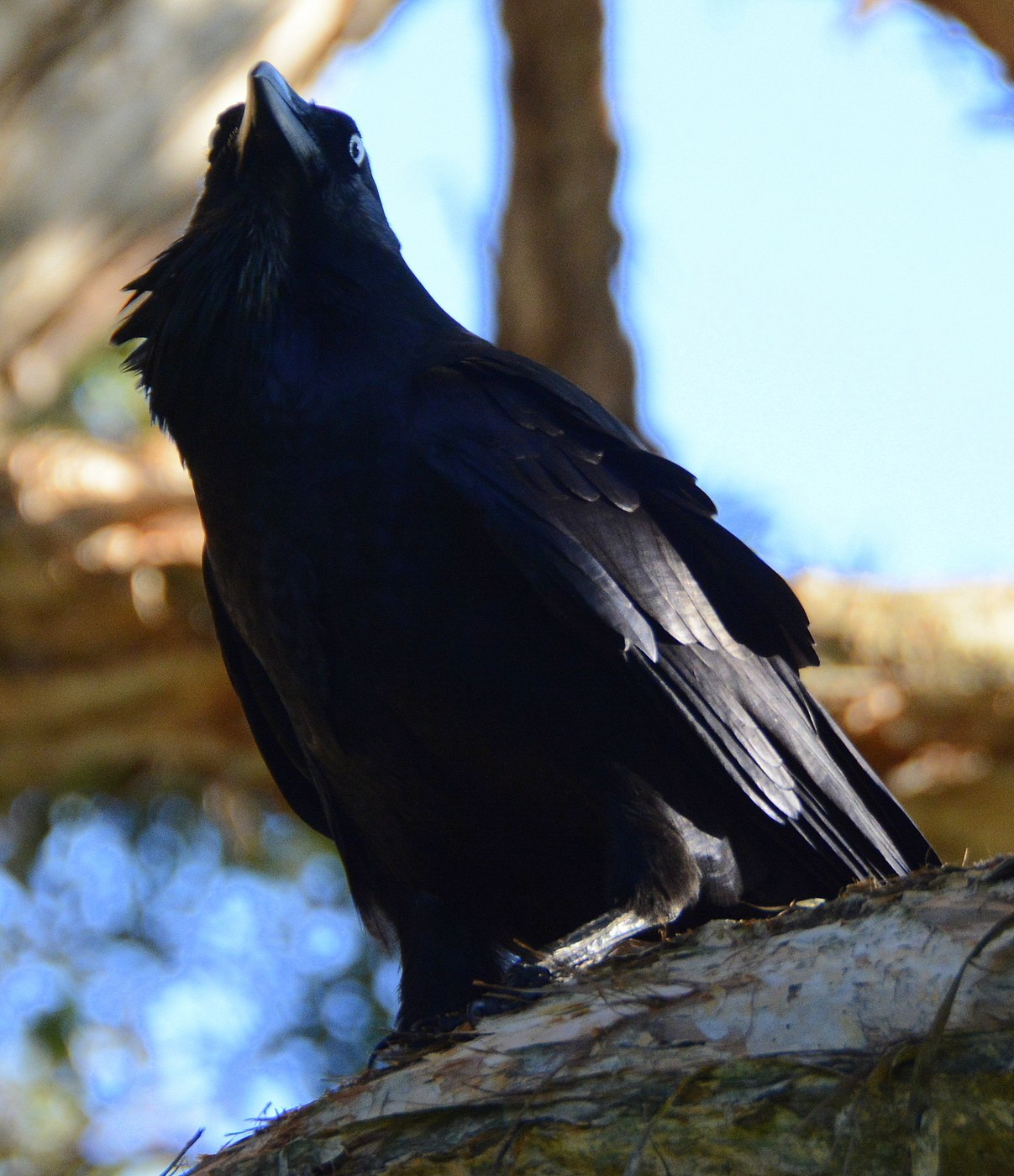
What Australian Raven Feathers Look Like
Australian Ravens are large, all-black corvids, and every contour and flight feather reflects that: expect glossy black feathers with a blue-green-purple sheen in good light, never any white, brown, or grey patches on the visible surface. Primaries run roughly 28-33 cm, secondaries are broad and rounded at the tip, and the throat and upper-breast feathers are distinctive - adult ravens grow long, pointed, shaggy "hackle" feathers on the throat that they fluff out during calling displays, unlike the smoother throat feathering of crows. One genuinely useful trick: if you part the barbs at the very base of a fresh body feather, Australian Raven (and Little Raven) feathers typically show pale grey-white bases, whereas Torresian and Little Crow feathers usually show darker grey bases.
Step-by-Step: Is This Feather From an Australian Raven?
- Confirm solid black. Any brown, grey, or white patch rules out raven; Australian corvids generally show no plumage patterning at all.
- Check the size. Body feathers of 6-10 cm and primaries near 30 cm point to a large corvid rather than a smaller songbird.
- Look for hackles. Long, narrow, slightly frayed-looking pointed feathers with looser barbs likely came from the throat/breast region unique to ravens.
- Part the base barbs. Pale bases suggest raven; darker grey bases suggest a crow species instead (a helpful but not absolute clue).
- Feel the sheen. Tilt the feather in the light - a genuine green-purple gloss is typical of healthy raven plumage.
Similar Species & How to Tell Them Apart
- Torresian Crow / Little Crow: Nearly identical black feathers; the throat hackle feathers and pale feather bases are the best clues favouring raven, though overlap exists and range helps narrow it down.
- Currawongs (e.g., Pied Currawong): Show white patches in the wings and tail tip - any white immediately rules out raven.
- Common Starling: Much smaller feathers with a speckled, iridescent green-purple sheen and pale tips, not a clean solid black.
- Black Cockatoo species: Far larger, broader feathers, often with red, yellow, or white tail panels absent in ravens.
Where & When You'll Find Them
Australian Ravens are widespread across southern and eastern Australia in open woodland, farmland, and urban parks, often seen in pairs or small family groups rather than the huge flocks some crows form. Feathers commonly show up under communal roost trees, around rubbish tips and roadside carrion, and near nest trees during the spring breeding season when adults are provisioning young and feather wear increases. Ravens undergo a complete molt after breeding (typically summer), so worn, faded flight feathers are most likely to be dropped in the months following nesting.
Frequently asked questions
How can I tell a raven feather from a crow feather?
Look for long, shaggy throat hackle feathers and part the base of a fresh body feather - pale grey-white bases favour raven, while darker grey bases favour crow species, though range also matters.
How big is an Australian Raven feather?
Primaries run about 28-33 cm and body feathers 6-10 cm, fitting a large corvid rather than a smaller songbird.
Why does this black feather look shiny blue-green?
Healthy raven plumage has a natural blue-green-purple gloss visible when tilted in good light, distinct from the flatter black of some other dark birds.
What are the shaggy feathers under the throat?
Adult Australian Ravens grow long, pointed hackle feathers on the throat that they fluff out while calling; finding one of these is a strong raven clue.
Could a white or brown patch still be from a raven?
No - Australian Ravens show no white, brown, or grey patterning on their feathers, so any patch of color points to a different species such as a currawong.