
How to Identify Australasian Swamphen Feathers
A guide to the deep purple-blue body feathers and flashing white undertail coverts that identify the Australasian Swamphen, a large marsh rail.
Read the full Australasian Swamphen encyclopedia entry →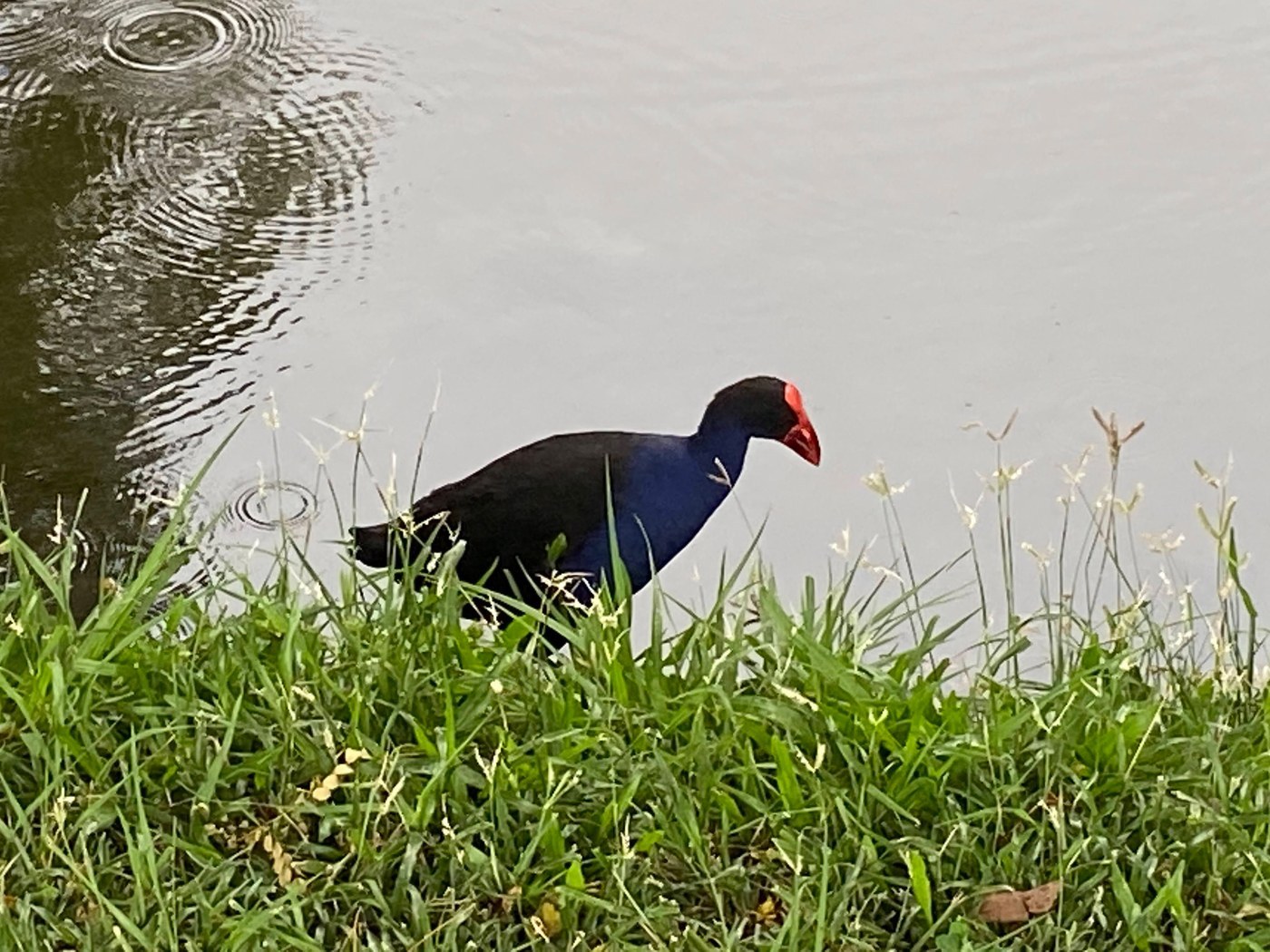
What Australasian Swamphen Feathers Look Like
The Australasian Swamphen is a large, boldly colored rail of Australian and Pacific wetlands. Head, neck, and underparts are covered in deep, iridescent purple-blue feathers, glossiest and most violet-toned on the head and breast. The back and wings are glossy black, noticeably less iridescent than the head/breast feathers, giving a two-toned effect across the body. The most useful diagnostic feature is at the rear: undertail covert feathers are pure white and fluffy, often flicked conspicuously when the bird is alarmed, creating a bright white flash against the otherwise dark body - a single white, downy feather from this region paired with purple-blue body feathers is a strong combination for this species. Flight feathers are blackish, short, and rounded, reflecting a rail's generally weak, low flight style.
Step-by-Step: Is This Feather From an Australasian Swamphen?
- Check for purple-blue iridescence on head/breast feathers, distinct from the duller black of the back and wings.
- Look for pure white, fluffy undertail feathers. This bright white patch against dark purple-blue plumage is one of the most reliable clues.
- Note flight feather shape. Short, rounded, blackish primaries and secondaries consistent with a rail's weak flying ability rather than a strong flier's longer, pointed wings.
- Consider overall size. A large rail, so feathers should be sizable, larger than typical marsh songbirds but smaller than herons.
- Think about habitat. Reed beds, marshes, and lake edges across Australia, New Zealand, and Pacific islands.
Similar Species & How to Tell Them Apart
- Purple Gallinule (Americas): Similar purple-blue coloring but with a green tinge to the back rather than solid black, and found only in the Americas, so range alone typically separates the two.
- Grey-headed Swamphen (a related form/species elsewhere in range): Shows a gray head and neck rather than the solid purple-blue of Australasian Swamphen, an easy color difference.
- Purple Swamphen (broader species complex, various subspecies): Very similar overall; regional range and subtle color saturation differences are the main separators, though for practical purposes body/tail feather pattern overlaps heavily across this complex.
Where & When You'll Find Them
Australasian Swamphens live in wetlands, marshes, and lake margins with dense reed and rush cover across Australia, New Zealand, and various Pacific islands, where they forage on the ground and in shallow water among vegetation. As year-round residents in most of their range, molt (including a brief flightless period during wing molt) generally follows the breeding season, and shed feathers - especially the distinctive white undertail down - are most commonly found in and around reed beds and marsh vegetation where these birds spend nearly all their time.
Frequently asked questions
What is the clearest sign of an Australasian Swamphen feather?
Pure white, fluffy undertail covert feathers paired with deep purple-blue body feathers and glossy black (less iridescent) back/wing feathers.
Why do the head and back feathers look different colors?
Head and breast feathers show strong purple-blue iridescence, while the back and wings are duller, glossy black by comparison.
How does this compare to the American Purple Gallinule?
Purple Gallinule shows a greenish tinge to the back rather than solid black, and is found only in the Americas, so range usually settles the question.
Why are the flight feathers short and rounded?
Swamphens are rails with generally weak flight, so their flight feathers are built for short flushes rather than sustained flying.
Where should I search for shed feathers?
In and around reed beds and marsh vegetation at lake and wetland margins, where these birds spend almost all their time.