
How to Identify Aplomado Falcon Feathers
A step-by-step guide to identifying the blue-gray back, black facial mask, and rufous belly band of Aplomado Falcon feathers.
Read the full Aplomado Falcon encyclopedia entry →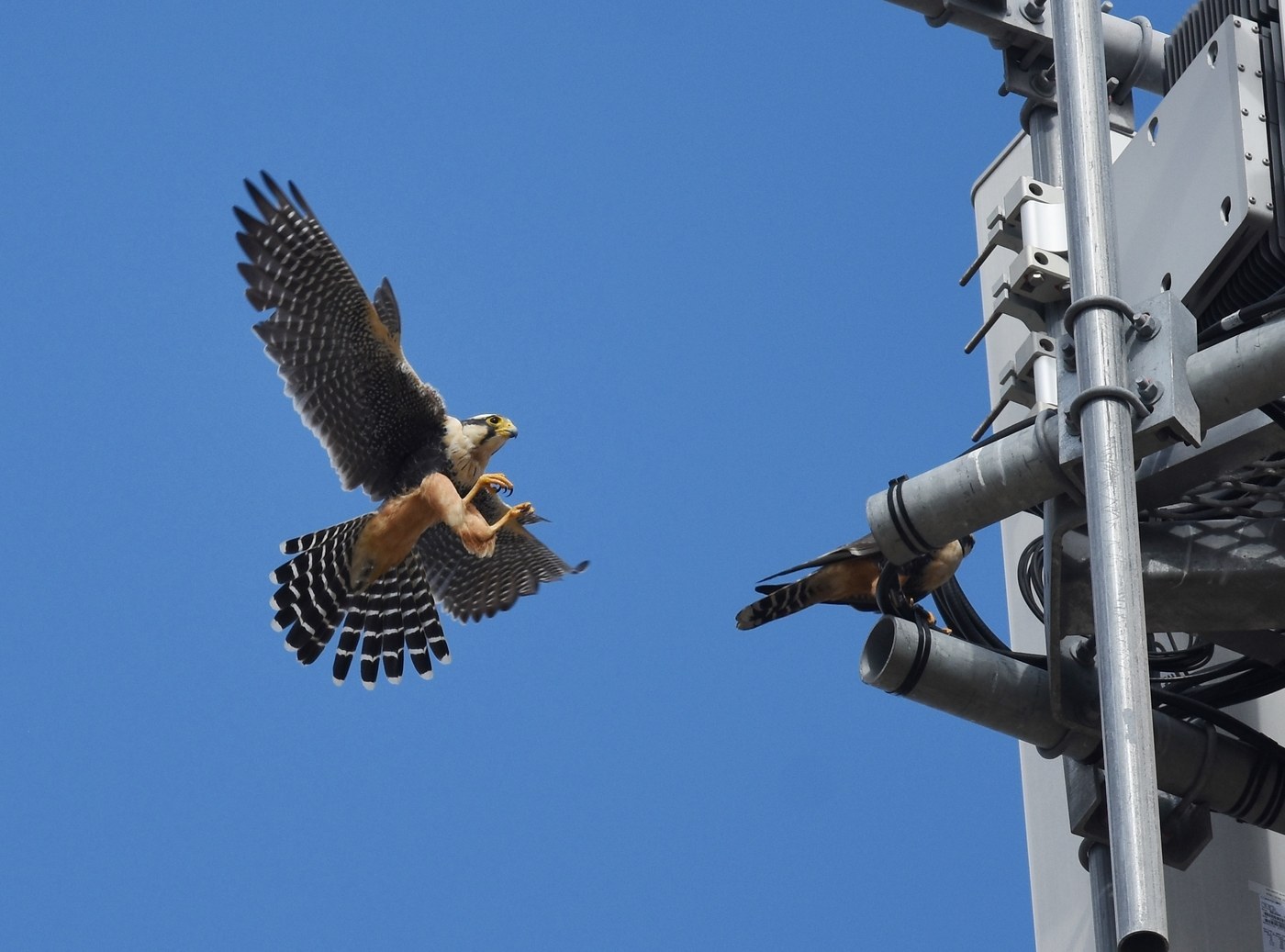
What Aplomado Falcon Feathers Look Like
The Aplomado Falcon is a slim, long-tailed falcon with a distinctive three-part color scheme. Upperparts, including the back and wing coverts, are blue-gray, while the flight feathers (primaries and secondaries) are darker gray-black with fine pale barring visible on the underside. The face shows a bold black "mustache" mark below the eye and a pale buff-to-white eyebrow stripe. The chest is pale/white, but the belly, flanks, and thighs are a rich cinnamon-rufous, separated from the white chest by a black band across the belly - this black belt is one of the most distinctive feather features of the species and is not seen in this combination on any other North or South American falcon. Tail feathers are long, gray, crossed by dark bands, with a white tip.
Step-by-Step: Is This Feather From an Aplomado Falcon?
- Check for a black belly band. A feather that is white/pale at the base, transitions to black in a defined bar, and then rufous is a strong match for this species' unique belt pattern.
- Look at overall body color zones. Blue-gray back, white chest, rufous belly - this three-color scheme is essentially unique among falcons in the Americas.
- Examine the tail. Long, narrow, gray feathers with clear dark banding and a white terminal tip.
- Check size and shape. Slim, long-winged falcon proportions - primaries are pointed but not as bulky as a Peregrine's.
- Look for the black facial "mustache" feather pattern if a face feather is found. Bold black stripe against white/buff.
Similar Species & How to Tell Them Apart
- American Kestrel: Much smaller, with a rufous back and tail rather than blue-gray, and no black belly band.
- Peregrine Falcon: Larger and bulkier, underparts are white with fine dark barring rather than a solid rufous belly and black belt.
- Merlin: Smaller, stockier, lacks both the black belly band and the strong facial mustache/eyebrow contrast.
Where & When You'll Find Them
Aplomado Falcons inhabit open grassland, savanna, and coastal prairie from the southwestern United States and Mexico south through much of Central and South America, often nesting in old stick nests built by other birds atop yuccas, mesquites, or utility poles. Molt typically follows the breeding season, and because this falcon frequently reuses the same nest platforms and hunting perches year after year, shed feathers are most reliably found near these traditional nest sites and open hunting grounds in grassland habitat. In the United States, populations were historically reduced across much of the Southwest and have since been the focus of reintroduction efforts in South Texas and southern New Mexico, so a feather found in these areas today may well come from a reintroduced or recovering population rather than a long-established resident pair. Pairs often hunt cooperatively, flushing small birds from cover with one falcon while the other intercepts the prey in the open, a habit that leads to frequent feather loss near favored open hunting fields.
Frequently asked questions
What is the single most diagnostic Aplomado Falcon feather feature?
A black band crossing the belly between a white chest and a rufous lower belly - a unique three-color pattern among American falcons.
How does an Aplomado Falcon feather differ from an American Kestrel's?
Kestrels show a rufous back and tail and lack the black belly band entirely; Aplomado's back is blue-gray.
Where do Aplomado Falcons nest?
In old stick nests built by other birds, often atop yuccas, mesquite trees, or utility poles in open grassland.
What does the tail feather pattern look like?
Long, gray feathers crossed by dark bands with a white tip.
Where should I look for shed feathers?
Near traditional nest platforms and open hunting perches in grassland or savanna habitat, which these falcons reuse year after year.