
How to Identify American Golden-Plover Feathers
A guide to the gold-spangled upperparts, black breeding underparts, and plain grayish underwing that identify American Golden-Plover feathers.
Read the full American Golden-Plover encyclopedia entry →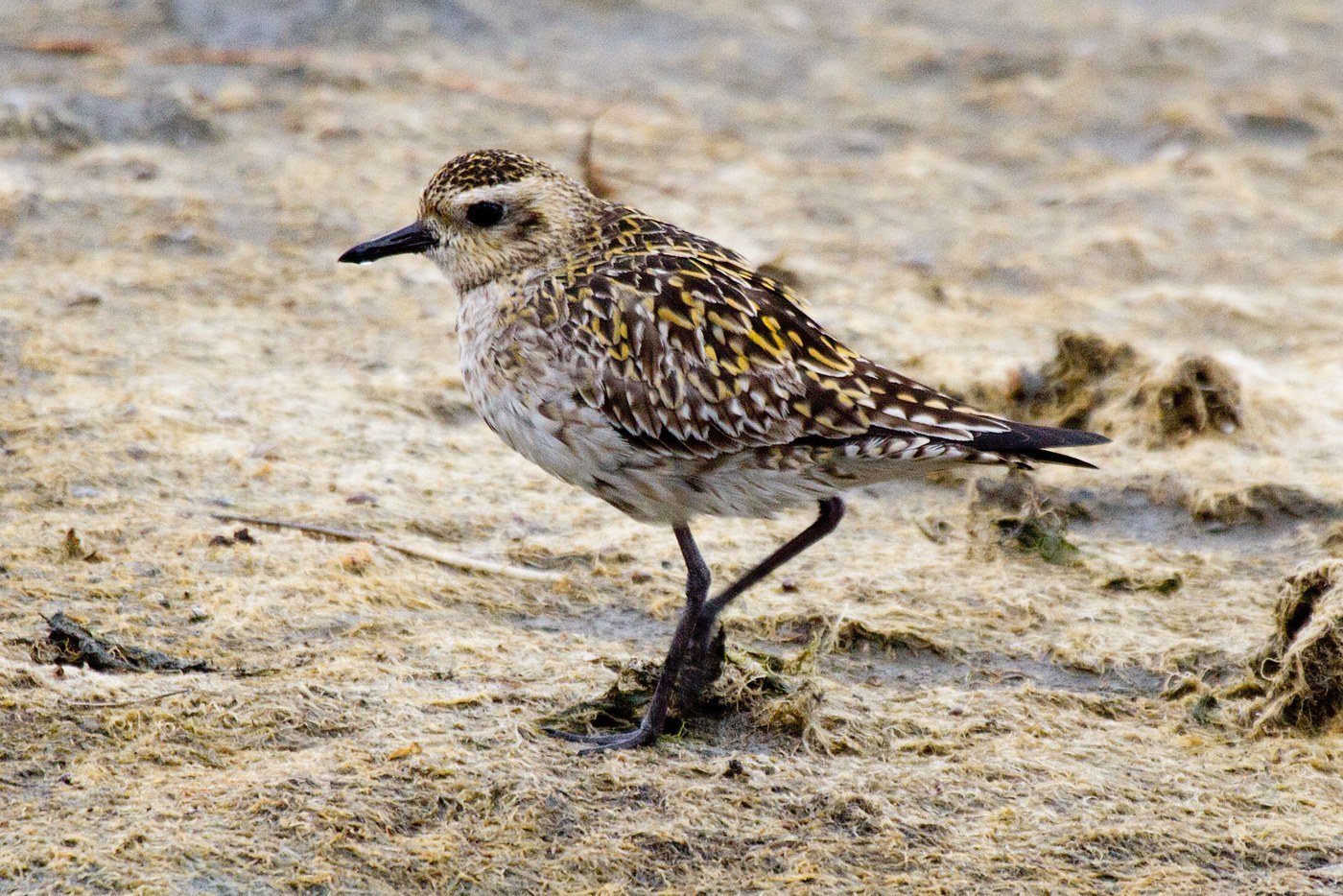
What American Golden-Plover's Feathers Look Like
American Golden-Plover feathers change dramatically with season, so identification depends on knowing which plumage you're looking at. In breeding plumage, back and covert feathers show bold gold-and-black spangling — each feather tipped with a bright golden-yellow spot against a blackish base, creating a scattered, sparkling pattern across the upperparts. Underparts feathers in breeding adults are solid black, bordered along the neck and flank by a broad white stripe feather line that runs from the forehead down the side of the neck. In nonbreeding and juvenile plumage, the same upperpart feathers are duller, showing brownish-gray with buff-and-black mottling rather than crisp gold spangles, and underparts feathers turn plain grayish-white with light mottling on the breast. Across all plumages, underwing covert feathers are plain grayish, without any bold black patch — an important, consistent trait.
Step-by-Step: Is This Feather From an American Golden-Plover?
- Check for gold spangling. Feathers with distinct golden-yellow spots on a blackish background, found in spring or summer, point strongly to breeding-plumage golden-plover.
- Look for the black-and-white face/neck pattern. A crisp white stripe bordering solid black underparts feathers fits breeding adults.
- Examine underwing coverts. Plain grayish underwing feathers (not blackish) rule out Black-bellied Plover, which has black axillary "wingpit" feathers.
- Consider size. Flight feathers around 12–14 cm fit a medium shorebird, smaller and daintier than a Black-bellied Plover's.
- Note the season. Duller, mottled brown-buff feathers found in fall likely represent nonbreeding or juvenile plumage of this or a very similar species.
Similar Species & How to Tell Them Apart
The Black-bellied Plover is the primary look-alike but is larger and stockier, with black axillary (wingpit) feathers and a white rump/uppertail patch — both features absent in American Golden-Plover, which shows plain grayish underwing feathers throughout. The Pacific Golden-Plover is extremely similar in feather pattern and is very difficult to separate from American Golden-Plover using plumage alone; subtle differences include slightly more extensive gold spangling and marginally longer leg feathering in Pacific Golden-Plover, but these are unreliable on an isolated feather, and range (Pacific Golden-Plover is a Pacific/Asian-leaning migrant) is often the better clue. When in doubt, the safest confident call from a feather alone is "golden-plover" rather than pinning down the exact species.
Where & When You'll Find Them
American Golden-Plovers breed on Arctic tundra across northern Canada and Alaska, then undertake one of the longest migrations of any shorebird, wintering on the grasslands of southern South America. During migration they favor short-grass fields, plowed farmland, airports, and mudflats across the interior and eastern United States. Feathers are most likely to be found during the spring (April–May) and fall (August–October) migration windows, when flocks stop to refuel in agricultural fields, and molt into and out of breeding plumage happens largely on or near the breeding and wintering grounds rather than at stopover sites.
Frequently asked questions
What's the clearest sign of breeding-plumage American Golden-Plover?
Gold-and-black spangled feathers on the back paired with solid black underparts bordered by a white neck stripe are the clearest combination for breeding adults.
How do I rule out Black-bellied Plover?
Check the underwing covert feathers — Black-bellied Plover has a black axillary patch, while American Golden-Plover's underwing is plain grayish throughout.
Can I always tell American Golden-Plover from Pacific Golden-Plover by feather?
Not reliably; the two are extremely similar in plumage, and a lone feather is usually best identified only to the golden-plover group unless other clues like location are available.
Why do fall feathers look so much plainer than spring ones?
By fall, adults and juveniles are in nonbreeding plumage, which replaces the bold gold spangling and black underparts with duller brownish-gray, buff-mottled feathers.