
How to Identify Alexandrine Parakeet Feathers
A guide to identifying Alexandrine Parakeet feathers by their grass-green body plumage, long blue-tipped tail, and the distinctive maroon shoulder patch that separates them from Rose-ringed Parakeet.
Read the full Alexandrine Parakeet encyclopedia entry →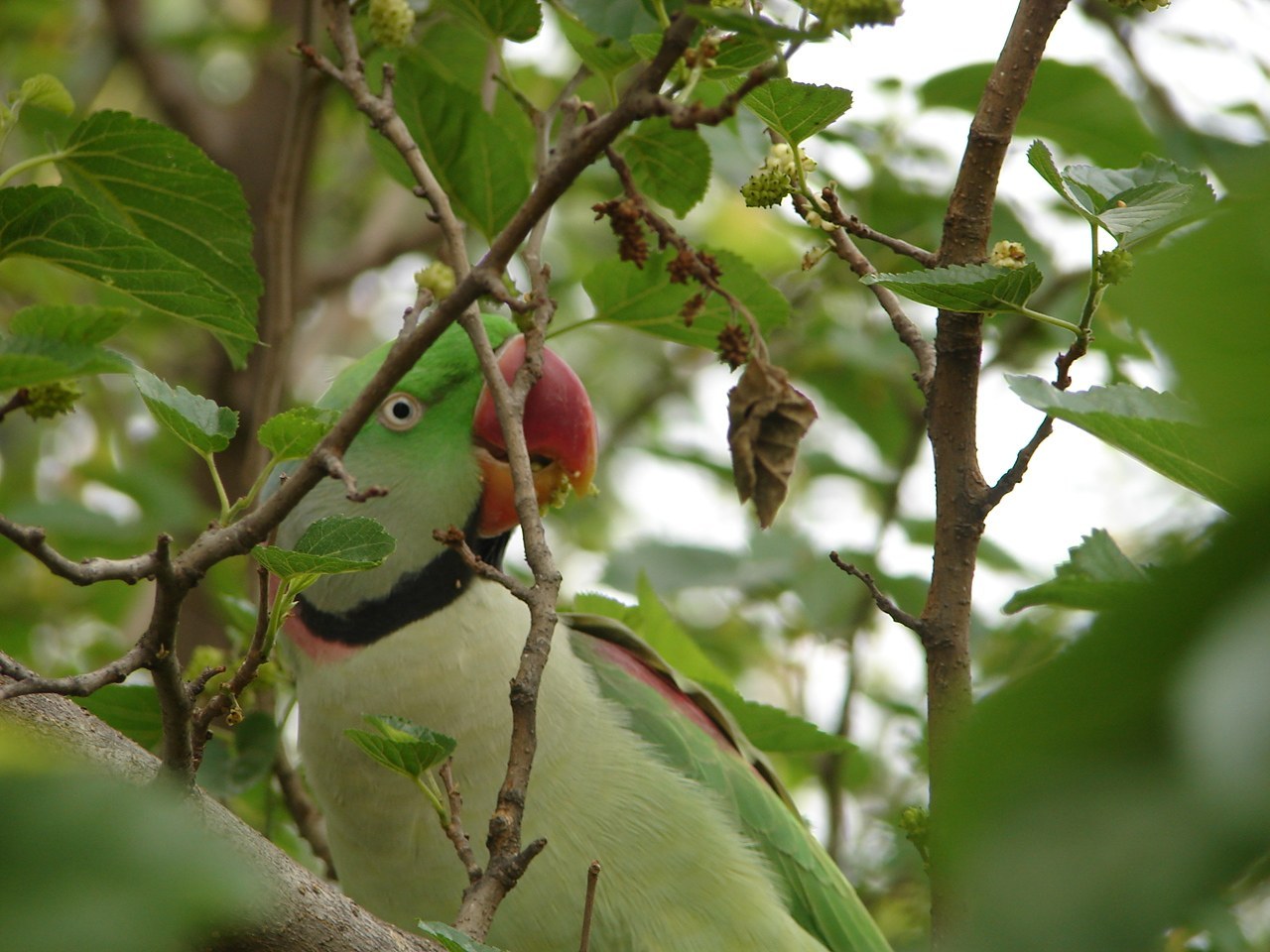
What Alexandrine Parakeet's Feathers Look Like
Alexandrine Parakeet is a large, long-tailed parrot, and its feathers show a mix of overall green plumage with a few sharply contrasting accent marks. Body feathers are rich grass-green, slightly yellower in tone than some related parakeets. Males show a rose-pink and black collar on the nape. The single most diagnostic feather is a small maroon-red patch found on the upperwing covert (shoulder area) — a marking essentially unique among green Old World parakeets. The central tail feathers are dramatically elongated, up to 25-30 cm, yellowish-green at the base and tipped with blue. Flight feathers are green with blue-gray tips.
Step-by-Step: Is This Feather From a Alexandrine Parakeet?
- Look for the maroon shoulder patch first. A small maroon-red feather found among green feathers is the fastest, most reliable way to confirm this species over its close relatives.
- Measure a central tail feather. Exceptional length (25-30 cm) with a blue tip and yellow-green base points to a large parakeet capable of growing such long tail feathers.
- Check the collar feather. A pink-and-black banded feather from the neck, if present, supports a male Alexandrine Parakeet origin.
- Assess overall size. Alexandrine Parakeet is notably larger than most related parakeets, so its feathers — especially flight and tail feathers — run correspondingly larger.
- Check green tone. A slightly yellower green than the more bluish-green of some related species can be a secondary supporting clue.
Similar Species & How to Tell Them Apart
- Rose-ringed Parakeet (Ring-necked Parakeet): Very similar green body and pink-and-black collar pattern, but noticeably smaller overall, and — critically — it entirely lacks the maroon shoulder patch that Alexandrine Parakeet shows on its upperwing coverts, making that single feather the deciding factor when available.
- Plum-headed Parakeet: Has a plum-pink or gray head rather than green, and is considerably smaller, with none of the maroon shoulder patch or the extreme tail length of Alexandrine Parakeet.
- Feral parakeet populations generally: Because both Alexandrine and Rose-ringed Parakeets are popular in the pet trade and have established feral populations well outside their native range, either species' feather can turn up almost anywhere near cities with escaped populations.
Where & When You'll Find Them
Alexandrine Parakeet is native to lowland forest, forest edge, and cultivated areas across South and Southeast Asia, from Afghanistan and India through Myanmar and Vietnam, where it often forms noisy roosting flocks in tall trees at dusk. It is also widely kept as a pet, with feral populations established in several cities worldwide, similar to the more famous Rose-ringed Parakeet. Wild populations are largely resident, with molt typically following the breeding season, while captive and feral urban birds molt on a more continuous basis year-round, so fresh-looking feathers can turn up in any month near a feral roost.
Frequently asked questions
What's the single best feather for confirming this species?
A small maroon-red feather from the shoulder/upperwing covert area is the most reliable single clue, since the closely related and similarly common Rose-ringed Parakeet entirely lacks this marking.
How can I tell this apart from Rose-ringed Parakeet just by size?
Alexandrine Parakeet is noticeably larger overall, so its flight and tail feathers run bigger — a very long central tail feather (25-30 cm) is more consistent with this species than the smaller Rose-ringed Parakeet.
If I find this feather in a city outside Asia, is it from a wild bird?
Almost certainly not — like Rose-ringed Parakeet, Alexandrine Parakeet has established feral populations from escaped pets in various cities worldwide, so an urban feather likely comes from one of these introduced populations.
Do females have the maroon shoulder patch too?
Yes, the maroon shoulder patch is present in both sexes, while the pink-and-black neck collar is limited mainly to adult males, so a green feather with a maroon patch but no collar feather could still be female.