
How to Identify African Spoonbill Feathers
How to identify African Spoonbill feathers by their pure white, unmarked plumage and how to separate them from Eurasian Spoonbill and white egrets.
Read the full African Spoonbill encyclopedia entry →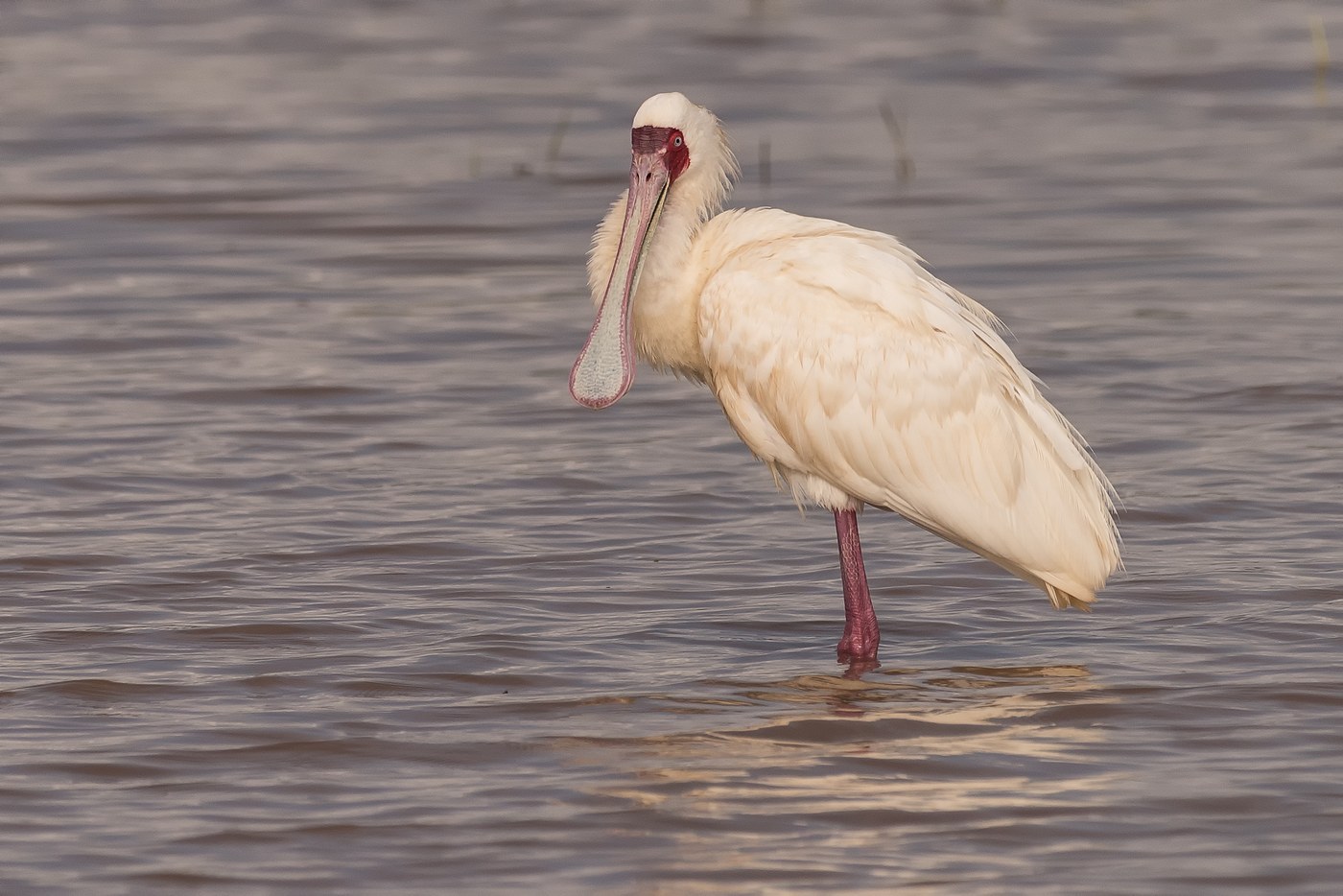
What African Spoonbill's Feathers Look Like
African Spoonbill is a large white wading bird named for its distinctive spoon-shaped bill, and its plumage is correspondingly simple but useful once you know what to check. Body and flight feathers are entirely white, without the black wingtips seen in some other spoonbill species, and without any gray wash. Feathers are large and rounded, with a soft, dense texture typical of big wading birds, generally 20-25 cm for flight feathers on adults. In breeding condition, adults grow slightly elongated, shaggy nape feathers forming a short, loose crest — a subtle but useful clue if present. Overall the feathers look clean, plain, and unmarked, without streaking, barring, or dark tips.
Step-by-Step: Is This Feather From a African Spoonbill?
- Check for pure, unmarked white. No gray wash, streaking, or dark tips anywhere on the feather.
- Measure flight feathers. 20-25 cm with a rounded tip suggests a large wading bird, larger than most egrets.
- Look for a shaggy nape feather. A slightly elongated, loosely structured white feather may indicate the short breeding crest.
- Feel the texture. Dense and soft but sturdier than the fine, wispy breeding plumes of egrets — a normal contour-feather structure rather than aigrette-type plumes.
- Consider the setting. A large plain white feather found near an African lake, river, or wetland fits this species' foraging habits in shallow water.
Similar Species & How to Tell Them Apart
- Eurasian Spoonbill: Very similar overall white plumage, but young birds of this species often show dusky or blackish tips on the outer primaries that African Spoonbill generally lacks as an adult; range is also a helpful clue, since Eurasian Spoonbill breeds in Europe and Asia and only reaches parts of Africa in winter.
- Great Egret: White overall too, but noticeably smaller feathers, and breeding adults grow fine, wispy, elongated plumes (aigrettes) on the back that are much thinner and more filamentous than a spoonbill's denser normal-shaped feathers.
- Cattle Egret: Much smaller, with buff-orange breeding plumes on the head and chest rather than plain white throughout.
Where & When You'll Find Them
African Spoonbill is found across shallow lakes, rivers, and wetlands in sub-Saharan Africa and Madagascar, where it feeds by sweeping its spoon-shaped bill side to side through shallow water to detect prey by touch. It is largely resident, though populations may shift locally in response to seasonal water levels and rainfall, and it nests colonially in trees or reedbeds, often alongside herons, ibises, and storks. Feathers are most commonly found near these mixed-species wetland roosts and colonies, particularly around nesting trees on islands or riverbanks, with the heaviest turnover following the breeding season.
Frequently asked questions
What's the best way to rule out Eurasian Spoonbill?
Check the primary tips for any dusky or blackish coloring — young Eurasian Spoonbills often show this, while African Spoonbill is typically clean white throughout, though range and season should also factor into the decision.
How is this different from a Great Egret feather?
African Spoonbill feathers are larger and denser overall, while Great Egret's breeding plumes are notably thinner, longer, and more wispy in structure, even though both are all-white birds.
Does this species grow showy breeding plumes like herons do?
Only subtly — African Spoonbill develops a short, loose, shaggy crest on the nape rather than the long trailing aigrettes seen in many egrets and herons.
Where around a wetland should I look for feathers?
Check near shallow feeding areas and communal roost or nesting trees, since this species often forages and breeds alongside other large wading birds in mixed colonies.