
How to Identify African Openbill Feathers
How to identify African Openbill feathers by their strong green-purple-bronze gloss and uniformly dark plumage, without any of the white patches seen on related storks.
Read the full African Openbill encyclopedia entry →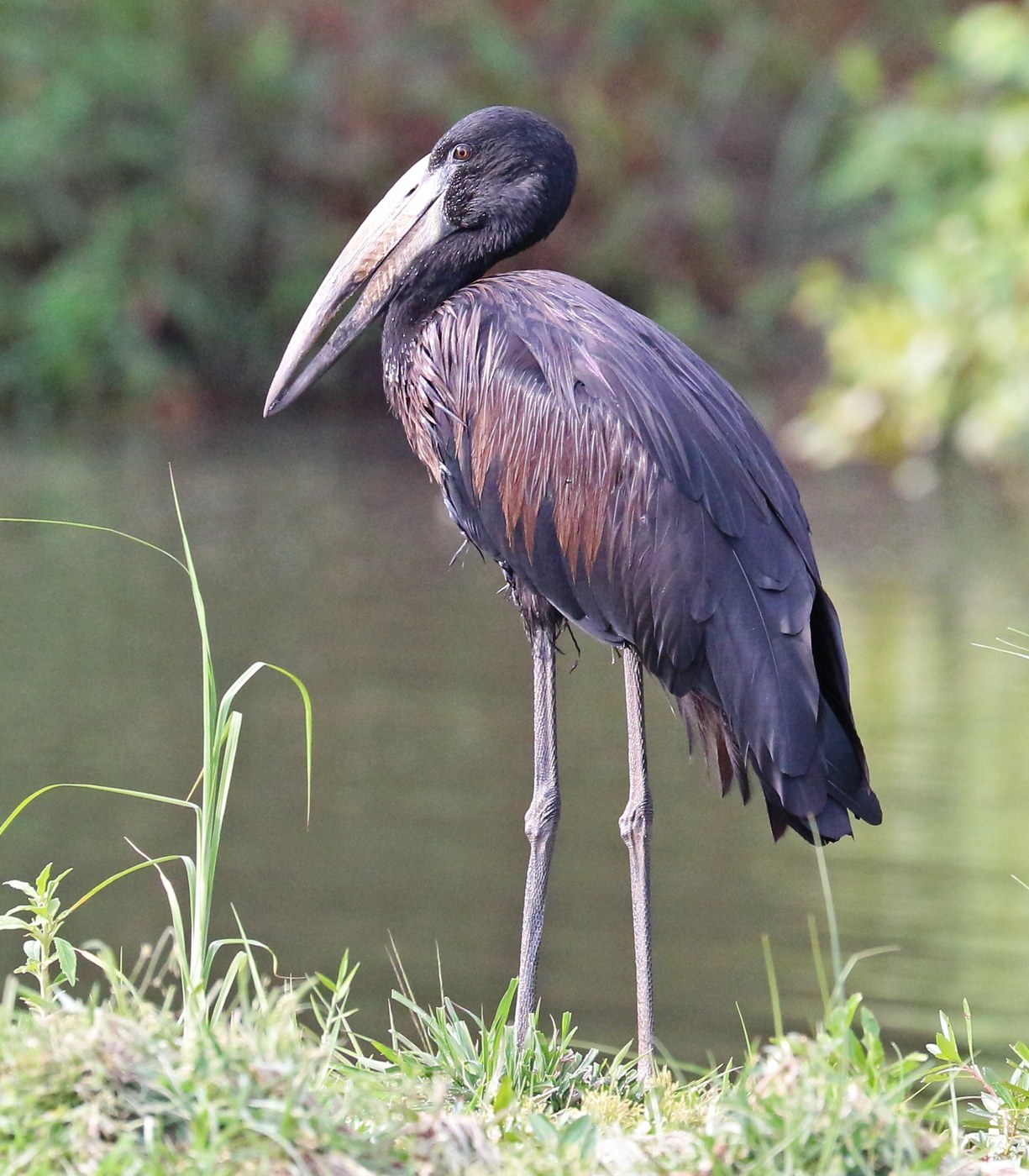
What African Openbill's Feathers Look Like
African Openbill is a marsh-dwelling stork known for the distinctive gap in its bill used for extracting snails, but its feathers offer their own clear signature. Plumage is almost entirely blackish, but with an unusually strong iridescent sheen of green, purple, and bronze, especially visible on the wing covert and back feathers in good light — more glossy overall than most other African storks. Flight feathers are black, broad, and blunt-tipped, typical of a large wading bird, generally 20-30 cm on adults. Unlike several relatives, African Openbill has no white patches anywhere in adult plumage — the entire bird, wings, back, and belly, reads as dark with varying degrees of gloss. Juveniles are duller, more brownish-black, and show less iridescence than adults.
Step-by-Step: Is This Feather From a African Openbill?
- Check for glossy iridescence. Tilt the feather in good light and look for green, purple, or bronze sheen across the wing covert or back feather — stronger and more colorful than typical black stork gloss.
- Confirm there's no white. A completely dark feather, or set of feathers, with no white patches anywhere rules out several similar-looking storks that always show some white.
- Measure the flight feather. 20-30 cm with a blunt tip is consistent with a mid-sized stork.
- Compare juvenile duller tones. A brownish-black feather with weak gloss may still be this species if it's from a juvenile.
- Cross-check the habitat. A dark, glossy stork feather found near freshwater marsh or swamp fits this species' strong association with wetland snail beds.
Similar Species & How to Tell Them Apart
- Abdim's Stork: Has a clean white rump and belly contrasting with a black chest and back — a two-tone bird overall, unlike the essentially all-dark Openbill.
- Woolly-necked Stork: Shows a distinctive white "woolly" neck ring and white belly against a black cap and back, again providing a clear white patch that Openbill lacks entirely.
- Glossy Ibis: Similarly iridescent, but a much smaller bird with narrower, more slender feathers reflecting its smaller body size; also has a longer, more slender, downcurved bill unrelated to feather shape but useful context if the bill is found nearby.
Where & When You'll Find Them
African Openbill inhabits freshwater marshes, swamps, and floodplains across sub-Saharan Africa, closely tracking the abundance of apple snails, its primary prey. It is nomadic or locally migratory, following wetland conditions rather than keeping to a fixed migratory schedule, and often nests in large mixed-species colonies. Feathers are most often found near marsh roosts and breeding colonies, with the heaviest feather turnover following the breeding season.
Frequently asked questions
What's the easiest way to rule this species in or out?
Look for a strong green-purple-bronze iridescent sheen combined with a total absence of white anywhere on the feather — that combination narrows things down quickly among African storks.
How can I tell this apart from a Glossy Ibis feather?
Openbill feathers are noticeably larger and broader, reflecting its bigger stork-sized body, while Glossy Ibis feathers are narrower and come from a much smaller bird.
Why does this stork lack the white patches other storks have?
It's simply a matter of species-specific plumage evolution — African Openbill's all-dark, high-gloss look is one of its defining features compared to close relatives like Abdim's and Woolly-necked Stork.
Are Openbill feathers likely to be found far from wetlands?
Unlikely — this species is tightly bound to marshes, swamps, and floodplains where its snail prey lives, so feathers found in dry upland habitat are less likely to belong to this species.